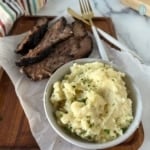
Smoked Brisket
Learn how to smoke a brisket low and slow with step-by-step instructions, pro tips on the stall, and the butcher paper wrap technique that keeps every slice juicy and tender.
Servings: 16 servings
Calories: 181kcal
Equipment
- smoker or grill with smoker box or tube
- pink butcher paper or foil
- Meat thermometer with probe
- basting brush or gloves for spreading seasoning and mustard
Ingredients
- 1 Full Brisket point and flat, approximately 16 pounds
- ¼ cup Prepared mustard (yellow mustard out of the bottle)
- ½ cup All-purpose seasonings
- ¼ cup Montreal steak seasoning optional
Instructions
- Using your hands, coat every surface of the brisket with a thin, even layer of yellow mustard. The mustard acts as a binder that holds your seasoning in place throughout the entire cook. You won't taste the mustard at the end of the cook.
- Generously season all sides of the brisket with your seasoning, pressing it firmly into the mustard layer so it grips the meat. Do not hold back here. A great brisket needs a bold, generous coat of seasoning to develop that beautiful bark.
- Allow the seasoned brisket to rest at room temperature for 30 to 45 minutes before it goes on the smoker. This rest period gives the rub time to penetrate the surface and begin bonding with the meat. While the brisket rests, go ahead and preheat your smoker to 225°F. Keep in mind this recipe generally takes 12-16 hours, but can take longer.
- Place the brisket fat side down directly on the smoker grate and close the lid.
- Around the 8 hour mark your meat will typically be around 165°F, you may notice the temperature stops climbing even though your smoker is holding steady. Do not panic. This is completely normal and is known as "the stall." It happens when the fat begins rendering and creates a natural cooling effect on the surface of the meat. It can last for several hours, so be patient and resist the urge to turn up the heat.
- When the brisket is 165°F, check the surface of your brisket. If the outside has developed your preferred level of bark (meaning a firm, dark mahogany-colored crust that feels set to the touch) it is time to wrap. Do not wrap before your brisket hits 165°F, and do not wrap until you are happy with the bark. Both conditions need to be met. Carefully remove the brisket from the smoker, lay on to a sheet of pink butcher paper on a large work surface, place the brisket in the center, and wrap it snugly by folding edge over edge to create a tight, leak-proof seal. Return it to the smoker seam side down.
- Continue smoking until the brisket reaches an internal temperature between 198°F and 203°F. Use a probe or fork to test for tenderness by inserting it into the thickest part of the flat. When it glides in with little to no resistance, your brisket is ready.
- Once the brisket comes off the smoker, leave it wrapped and let it rest on the counter, with your thermometer probe still in place. Watch for the internal temperature to begin dropping. That drop tells you the brisket has finished cooking and is now resting. This rest period is not optional. It is one of the most important steps in the whole process and makes a real big difference in the final flavor and texture.
- If you plan to serve within the next hour, keep the wrapped brisket on the counter and slice after a full hour has passed. If dinner is still two or more hours away, place the wrapped brisket in your oven set to 170°F and leave it there until you are ready to serve. A brisket can hold in a 170°F oven for up to ten hours and come out absolutely fantastic.
Notes
This is a low and slow recipe, so plan ahead, a brisket at 225°F will generally take 1 to 1.5 hours per pound, though every brisket is a little different. Plan on at least 12 to 16 hours for a full brisket, plus your rest time.
Wood Choice For brisket, oak and hickory are the classic choices. If you prefer something a little milder, pecan is a good middle-ground option. Avoid fruitwoods like apple or cherry, as they tend to produce a lighter smoke.
Dry Rub: As a substitute- you can't go wrong with a simple rub of salt, pepper and garlic powder. Add smoked paprika and a pinch of cayenne to further develop the flavor.
If you are a big fan of seasoning use both the all purpose seasoning and Montreal steak. If you want to be more conservative with seasoning pick your favorite.
Storage Once your brisket has fully cooled, slice only what you plan to serve and store the rest as a whole piece. Wrap it tightly in butcher paper or plastic wrap, place it in an airtight container or ziplock bag. You can refrigerate for up to 4 days. Sliced brisket dries out faster than a whole piece, so keeping it unsliced until you need it makes a big difference.
Reheating The best way to reheat brisket without drying it out is low and slow in the oven. Place the brisket (or any slices) in a baking dish, add a splash of beef broth to the bottom of the pan, cover tightly with foil, and warm at 300°F for about 20 to 30 minutes.
Nutrition
Serving: 1serving | Calories: 181kcal | Carbohydrates: 1g | Protein: 24g | Fat: 9g | Saturated Fat: 3g | Polyunsaturated Fat: 0.3g | Monounsaturated Fat: 4g | Trans Fat: 0.001g | Cholesterol: 70mg | Sodium: 3669mg | Potassium: 388mg | Fiber: 0.3g | Sugar: 0.1g | Vitamin A: 32IU | Vitamin C: 0.1mg | Calcium: 21mg | Iron: 3mg
