

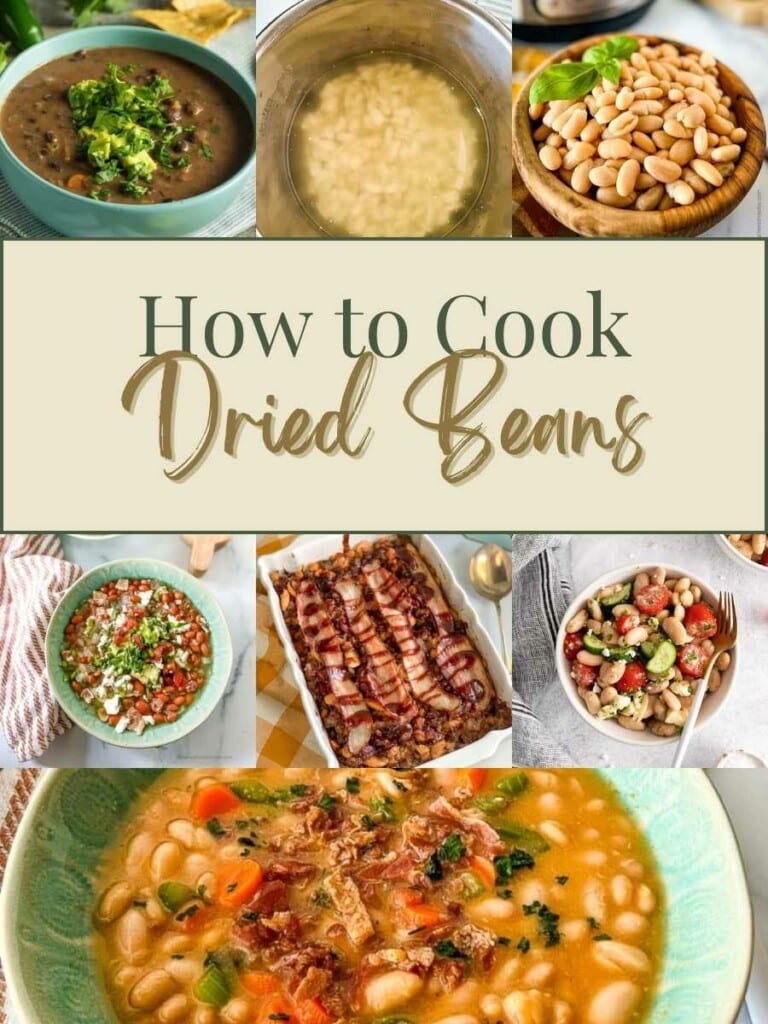

Growing up, dried beans were a regular staple in our home. My mom worked full-time, so she loved tossing beans in the slow cooker in the morning and coming home to a ready-made dinner. They were economical, easy to store in the pantry, and honestly? They tasted so much better than anything from a can.
That tradition has carried into my own kitchen. Even now, you’ll always find several bags of different dried beans in my pantry—black beans, pinto beans, great northern beans, and more. Over the years, I’ve created more than a dozen bean recipes for this blog because they’re just that versatile and delicious.
If you’ve been intimidated by cooking dried beans or think they’re too much work, I promise you—it’s easier than you think! Once you learn the basics, you’ll wonder why you ever bothered with canned beans. Dried beans are incredibly affordable (we’re talking $1 for a whole bag of beans, versus $2+ for each can of beans), they have a creamier texture, and the flavor is so much richer.
In this guide, I’ll show you how to cook dried beans using four different methods: stovetop, slow cooker, Instant Pot, and oven. Whether you want a hands-off approach or need beans ready fast, I’ve got you covered. You’ll learn everything from soaking (yes or no?), to cooking times, to storing them properly so they stay perfect in your fridge or freezer.
Let’s get started and turn those pantry staples into delicious, budget-friendly meals your whole family will love!
Content Covered Here
Are Dried Beans Safe?
Yes, dried beans are completely safe when cooked properly! You might have heard concerns about lectins or toxins in beans, and while it’s true that raw or undercooked beans contain a compound called phytohaemagglutinin (PHA), it’s nothing to worry about as long as you cook them correctly.
Kidney beans have the highest levels of this natural compound, but the good news is that proper cooking eliminates it. Here’s what you need to know: bringing your beans to a rolling boil for 10-15 minutes significantly reduces PHA levels, making them perfectly safe to eat.
This is why all the cooking methods in this guide include boiling as part of the process. Whether you’re using the stovetop, Instant Pot, slow cooker, or oven, as long as you cook your beans until they’re tender (not crunchy!), you’re good to go.
The bottom line? Dried beans aren’t dangerous—they just need to be fully cooked. Think of it like cooking chicken or eggs; proper cooking is part of the process, and once you do it right, you get a nutritious, delicious, and completely safe ingredient.
What Is A Dry Bean?
A dry bean is simply a bean that has been harvested and then dried, usually in the sun. They can be stored for a long time, which makes them a good staple to have in your pantry.
They are different from green beans, which are harvested while they are still immature and then cooked. Dried beans, on the other hand, are harvested when they are fully mature and then dried.

Benefits of Cooking Dried Beans
- Inexpensive Meal Option
Dried beans are an inexpensive option for a healthy meal. Especially now that the prices are getting higher and higher, we need to be more mindful of what we’re spending our money on.
They are a great way to get your protein and fiber without breaking the bank. You can buy a bag for around $2 which will be enough for 3 or 4 meals. That’s only about $0.50 per meal! - Nutritious and Healthy
Not only are dried beans an inexpensive option but they’re also packed with nutrients. They are a great source of protein and fiber, and they contain essential vitamins and minerals.
Cooking them is a great way to get all the benefits of it without having to eat them every day. You can cook them once and then use them in different recipes throughout the week. - Perfect for Meal Prep
Once you learn how to cook dried beans, you will have many uses for them, including easier meal prep. You can cook a big batch of the legumes at the beginning of the week and then use them in different recipes throughout the week. This is a great way to save time and money!
There are so many different ways to use it in recipes. You can add them to salads, soups, stews, jasmine rice, and more.
Cooking Methods
You can cook them in a pot on the stove, in a slow cooker, or even in an Instant Pot. There are also a lot of different ways to flavor them. You can add spices, herbs, or even vegetables.
The best way to cook dried beans is going to depend on what you’re making and how you want to flavor them. We’ve outlined a few different ways to cook them below.
Dried Beans vs Canned Beans
There are a few different things to consider when deciding whether to cook or use canned beans.
- Dried beans are more nutritious because they haven’t been processed. They’re also going to be less expensive.
- Canned beans are more convenient because you don’t have to cook them, but they’re more expensive and not as nutritious.
Dry are better because you can control the flavor more. When you cook them, you can add whatever spices or herbs you want. With canned, you are stuck with the flavors that are already in there.
You can also control the texture more when you cook dried beans. If you want them to be softer, you can cook them longer. To be firmer, you can cook them for less time.
If you’re looking for a quick and easy meal option, then canned beans are going to be the best choice.
But if you’re looking for a more frugal, nutritious, and flavorful option, then cooking dried beans is the better choice.

Do You Need To Soak Before Cooking?
There are some benefits to soaking beans before cooking, but the short answer is: it’s helpful but not always required. Let me explain.
Benefits of Soaking:
- Reduced cooking time. According to the USDA, beans that have been soaked in water for at least five hours will cook in about half the time as those that have not been soaked.
- Easier to digest. Soaking can help reduce gas and bloating. All legumes, including beans, contain a compound called oligosaccharides, which is a type of carbohydrate that the body cannot break down. Soaking helps to break down the oligosaccharides, which makes them easier to digest.
- More even cooking. Soaked beans tend to cook more evenly, with fewer split or burst beans and a creamier texture throughout.
The Salt Secret:
Here’s something many people don’t know: adding salt to your soaking water actually helps! Add about 2 teaspoons of kosher salt per cup of dried beans to your soaking water. The salt helps soften the bean skins and allows the beans to expand properly during cooking. This results in beans that are tender on the inside without splitting on the outside.
Some cooks also add a pinch of baking soda to the soaking water (about 1/4 teaspoon per cup of beans), especially when making hummus or refried beans where you want an extra-smooth, creamy texture.
Soaking Time and Temperature:
For traditional soaking, cover your beans with cold water (at least 2-3 inches above the beans) and let them soak for 8-12 hours at room temperature. You can also refrigerate them if your kitchen is very warm or if you’re soaking longer than 12 hours. Just don’t oversoak them beyond 24 hours, as they can start to ferment or become mushy.
Can You Skip Soaking?
Yes! Many recipes work perfectly fine without soaking, especially when using an Instant Pot or slow cooker. The no-soak method takes longer to cook, but it’s completely valid if you forget to soak ahead of time or you’re short on prep time.
Soaking Methods
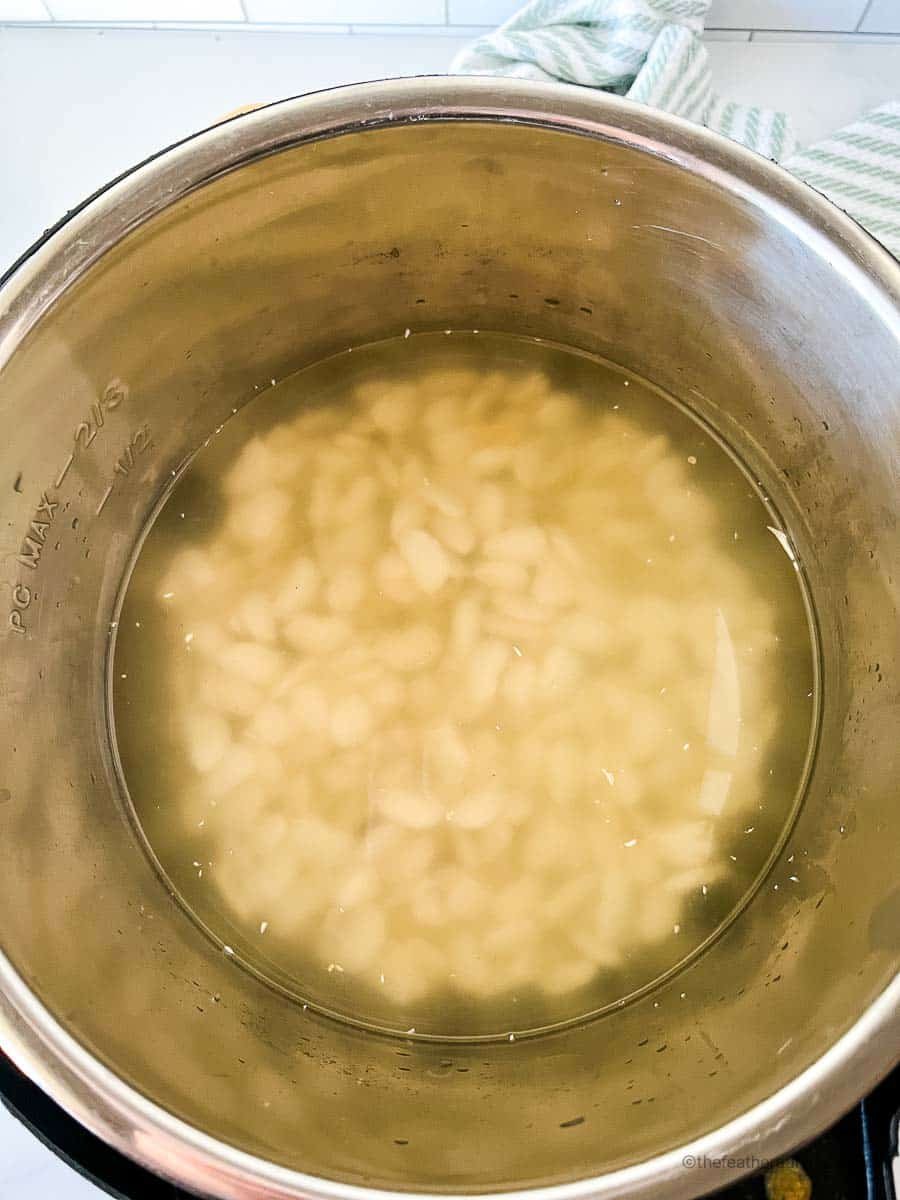
There are a few different ways to soak dried beans depending on how much time you have. Here are the three most common methods:
Overnight Soaking (Traditional Method)
This is the most hands-off approach and yields the best results. Place your dried beans in a large bowl or pot and cover them with cold water (at least 2-3 inches above the beans, as they’ll expand). Add 2 teaspoons of kosher salt per cup of dried beans to help soften the skins. Let them soak for 8-12 hours at room temperature, or refrigerate if soaking longer than 12 hours or if your kitchen is warm. In the morning, drain and rinse the beans, then cook according to your recipe.
Quick Soaking (When You Forgot to Plan Ahead)
To do a quick soak, bring a pot of water to a boil, and then add the beans. Boil for two minutes and then remove from heat. Cover the pot and let them soak for 1 hour before draining and cooking. This method cuts your soaking time significantly while still giving you most of the benefits.
Hot Soak Method
This is a middle-ground option. Cover beans with boiling water and let them soak for 2-4 hours. This method is faster than overnight soaking but gentler than the quick soak method.
When to Skip Soaking
You can skip soaking entirely if you’re using an Instant Pot or don’t mind a longer cooking time. Some people also prefer the no-soak method because they believe it results in beans with better flavor and a firmer texture.
Can You Oversoak Beans?
Yes, it is possible to oversoak beans, and doing so results in beans that are mushy and may even start to ferment. If you’re going to soak them overnight, be sure to drain them within 12-18 hours. Don’t let them sit in soaking water for more than 24 hours.
🎯 TFN Pro Tip
Keep in mind that soaking for too long can also cause them to lose nutrients. So, if you soak your beans, be sure to do it for the minimum amount of time that’s required.

Recipe FAQs
Yes, you do need to cook before adding them to a recipe. Dried beans are raw and not edible.
Some types of dried beans contain toxins called saponins, and they can cause digestive issues.
Rinsing removes the toxins, as well as any dirt or debris. Place them in a colander and rinse thoroughly with cold water before cooking.
If you’re looking for a quick and easy way to cook them, then the Instant Pot is a great choice.
If you’re looking for a more hands-off approach, then the slow cooker is a good option. And lastly, if you want more control over how the beans are cooked, then stovetop cooking is the way to go.
Beans Cooking Time
The cooking time for different types varies depending on the type of bean and method of cooking. Let’s take a look at the cooking times for each type of pre-soaked bean:
Stovetop
- Pinto: 90-120 minutes
- Navy: 90-120 minutes
- Great northern: 45-60 minutes
- Kidney: 90-120 minutes
- Black: 60-90 minutes
- Calico or garbanzo (chickpeas): 120-180 minutes
- Lima (butter): 60-90 minutes
Instant Pot
- Pinto: 20-25 minutes
- Navy: 20-25 minutes
- Great northern: 10-15 minutes
- Kidney: 20-30 minutes
- Black: 20-30 minutes
- Calico or garbanzo (chickpeas): 25 minutes
- Lima (butter): 25 minutes
Slow Cooker
- Pinto: 4-6 hours
- Navy: 6-8 hours
- Great northern: 4-6 hours
- Red kidney: Not recommended, see Are Dried Beans Safe above.
- Black: 3-4 hours
- Calico or garbanzo (chickpeas): 6-8 hours
- Lima (butter): 3 hours
Oven (375°F)
- Pinto: 75-90 minutes
- Navy: 75-90 minutes
- Great northern: 60-75 minutes
- Kidney: 90-120 minutes
- Black: 75-90 minutes
- Calico or garbanzo (chickpeas): 90-120 minutes
- Lima (butter): 60-75 minutes

How To Cook Dried Beans On Stovetop
Cooking dried beans on a stovetop is the most common way to cook them. It’s also the easiest method because all you need is a pot and some water.
Add them to a large pot of water or broth and bring them to a boil according to the cooking time above.
Reduce the heat and let it simmer. Then, drain and add them to your recipe.
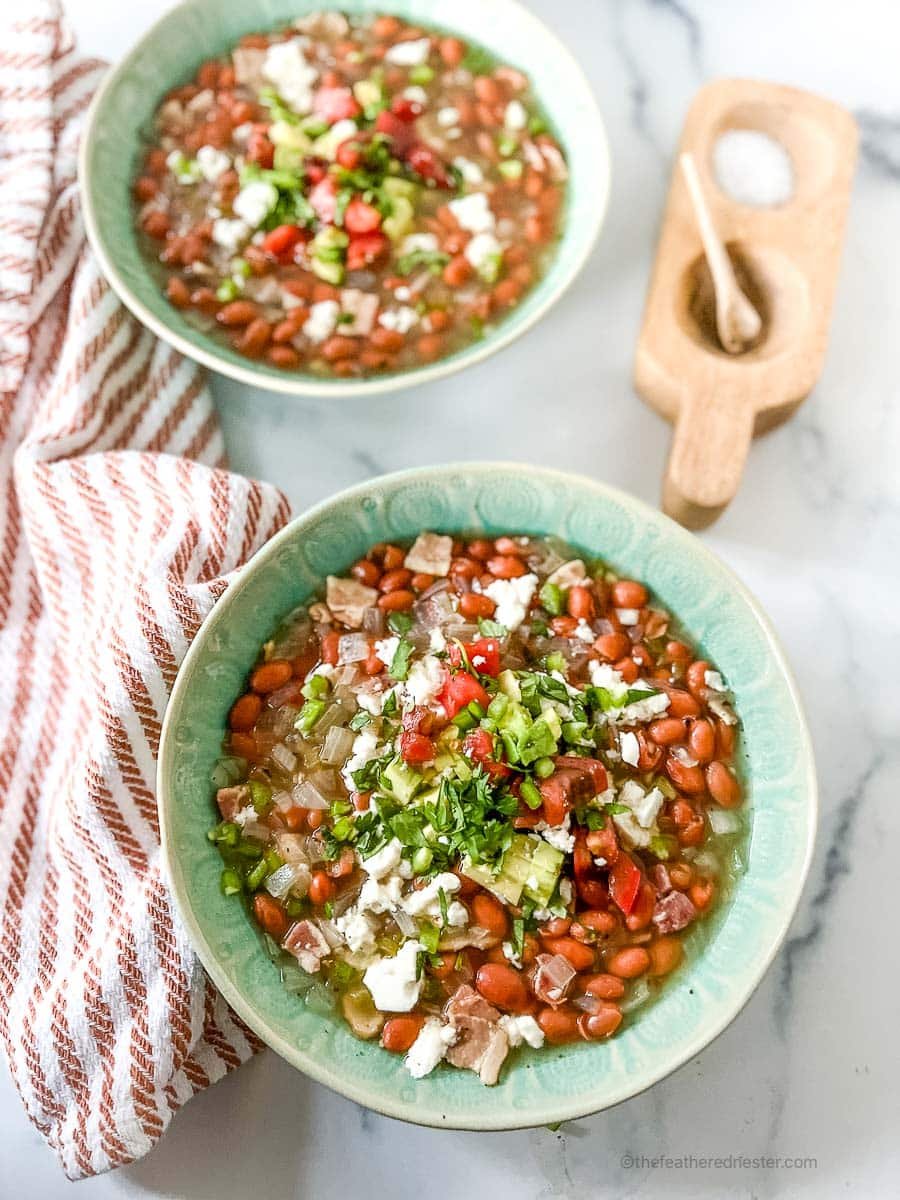
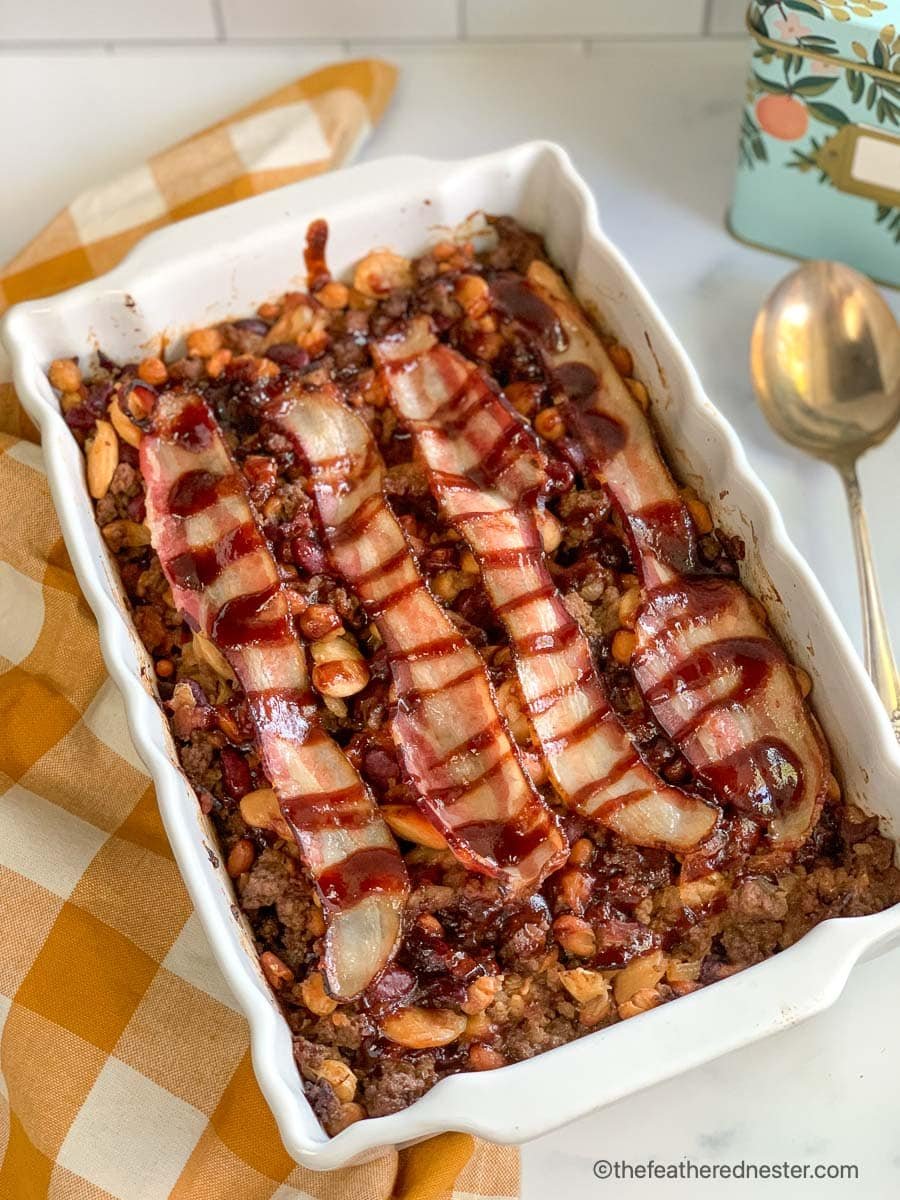
Try making our calico beans recipe!
How To Cook Dried Beans In Instant Pot
If you’re short on time, cooking in an Instant Pot or pressure cooker is a great option. You can have cooked beans in about an hour, which is much faster than cooking them on the stove.
Add them to the Instant Pot, then add enough water or broth to cover it, and then set the cooker on high pressure.
Let it cook according to cooking time, or until they’re soft. Once they’re done, you can use them in any recipe you like.
How To Cook Dried Beans In A Slow Cooker
Cooking dried beans in a slow cooker is another easy method. It’s perfect if you’re cooking a large batch because you can set it and forget it.
Add them to the slow cooker, then add enough broth or water to cover it, and then set the cooker on low.
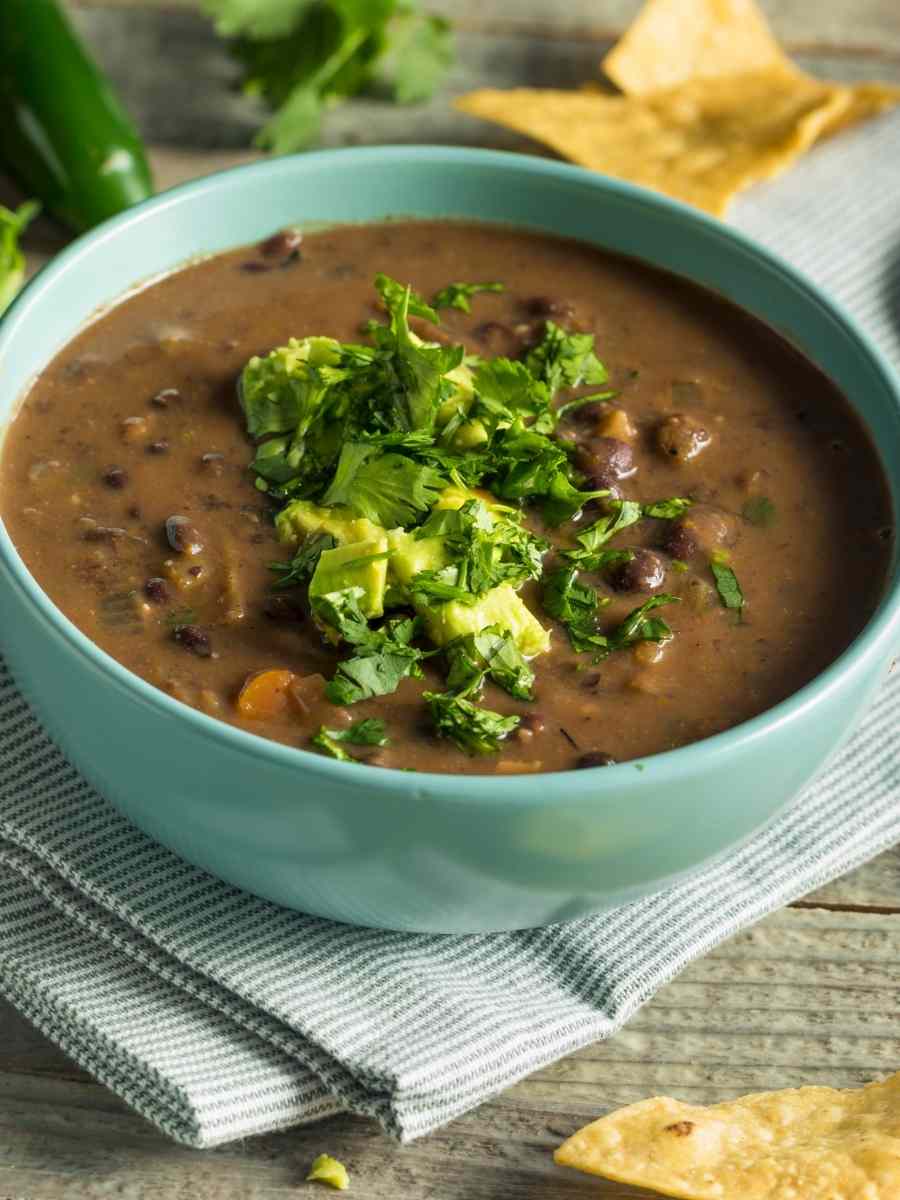
Let them cook according to the cooking time above, or until they’re soft. Once they’re done, you can use them in any recipe you like. Try adding them to salads, soups, or Mexican dishes.
Variations and Add-ins
- Add flavor and taste to your beans by cooking them with other ingredients and aromatics like onions, garlic, bay leaves, celery, thyme, rosemary, and herbs.
- Try adding a can of diced tomatoes, green chilies, and cumin for a flavorful Mexican-inspired dish.
- If you want to make it more of a meal, then try cooking them with sausage, bacon, chicken, or ground beef.
- Add some spice to your beans by adding cayenne pepper, chili powder, or hot sauce.
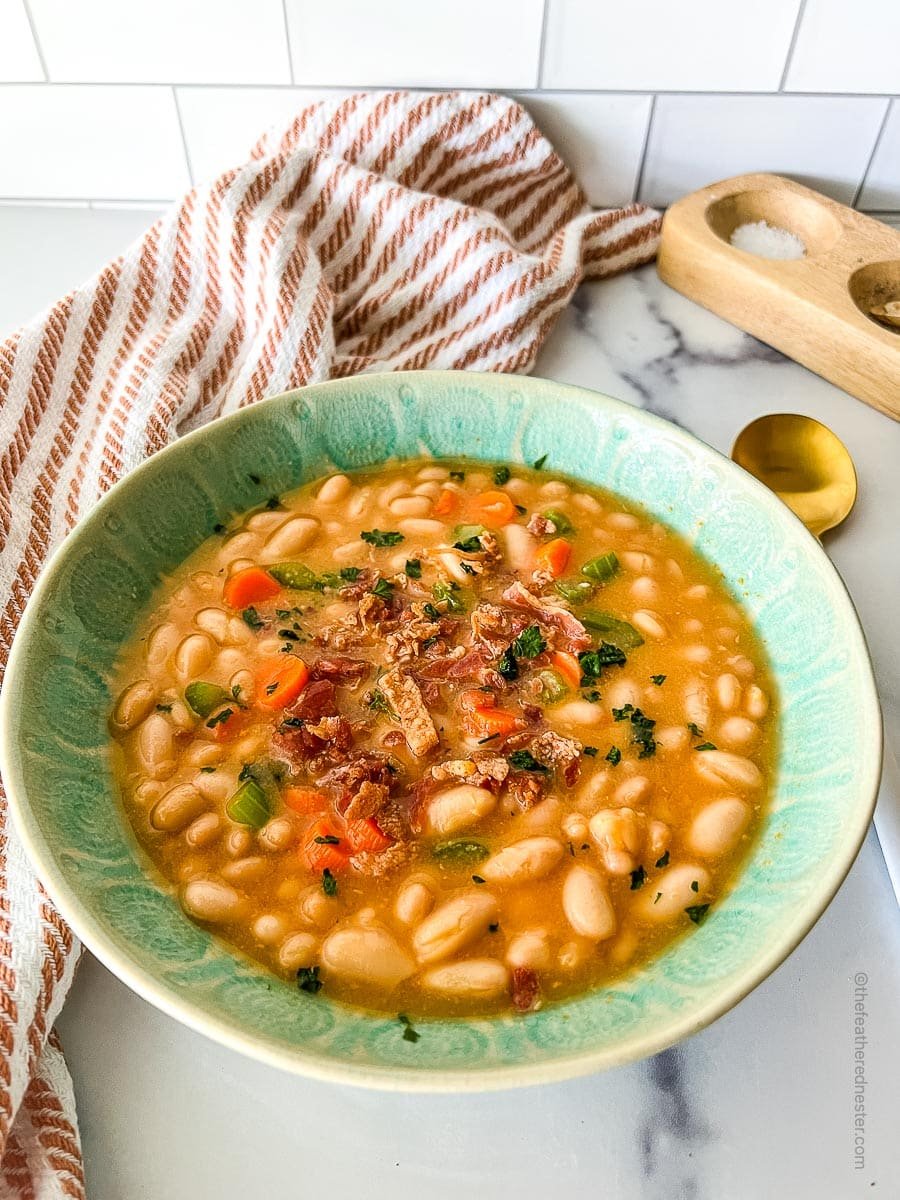
- Make them into a soup by adding broth and vegetables like carrots, plus salt and black pepper.
- You can also add it to different recipes. Try adding them to soups, stews, salads, or rice dishes.
How To Store Cooked Beans
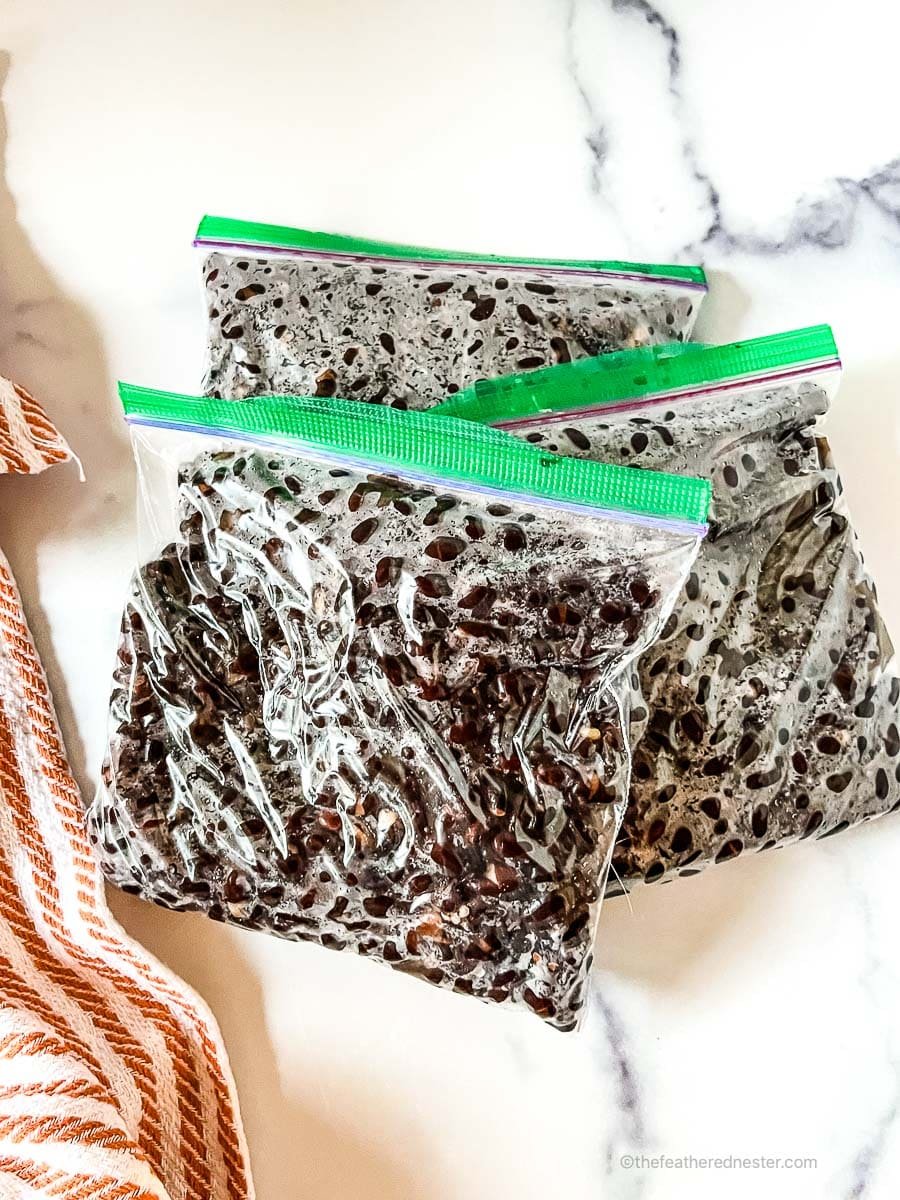
Cooked dried beans can be stored in the fridge for up to four days or in the freezer for up to six months. Be sure to store them in an airtight container so they don’t dry out.
When you’re ready to use them, thaw them in the fridge overnight. Then, add them to your recipe and enjoy!
Leave a Reply