

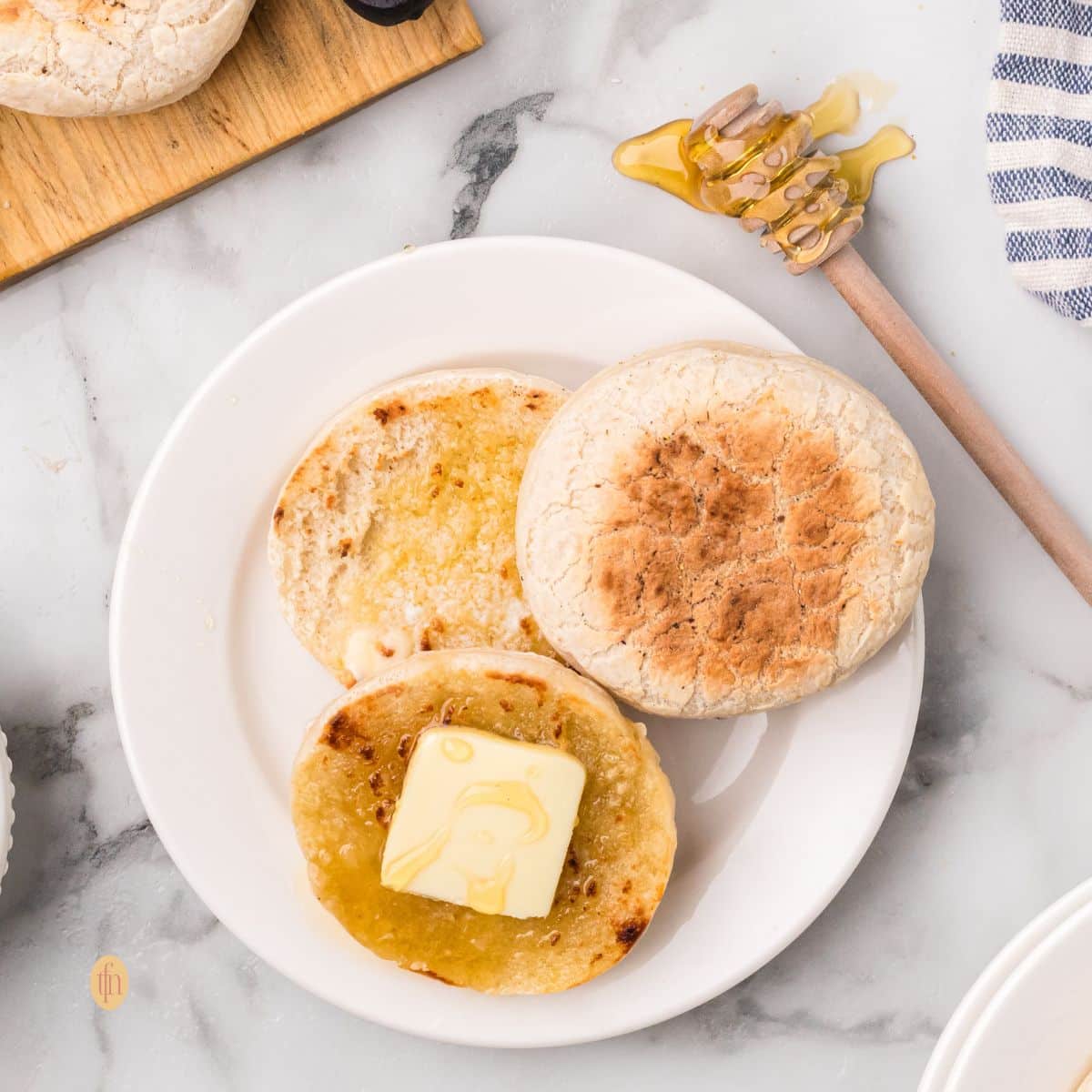

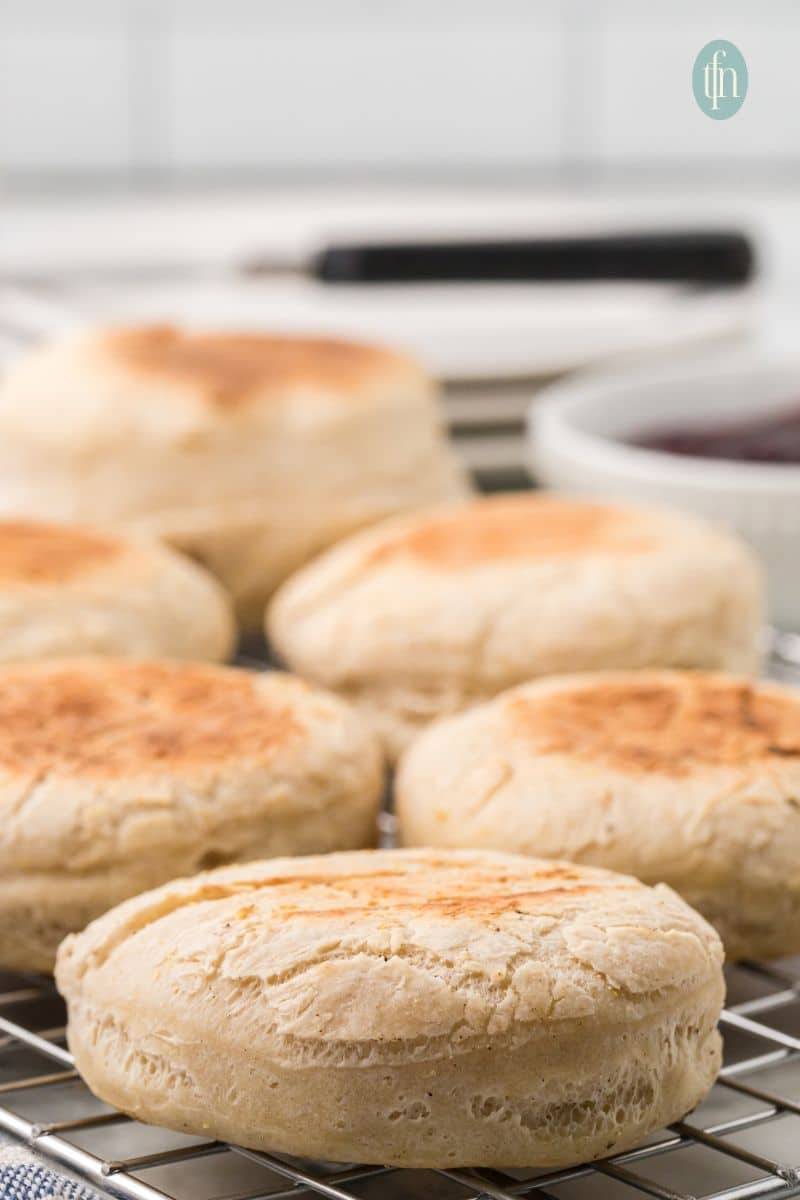
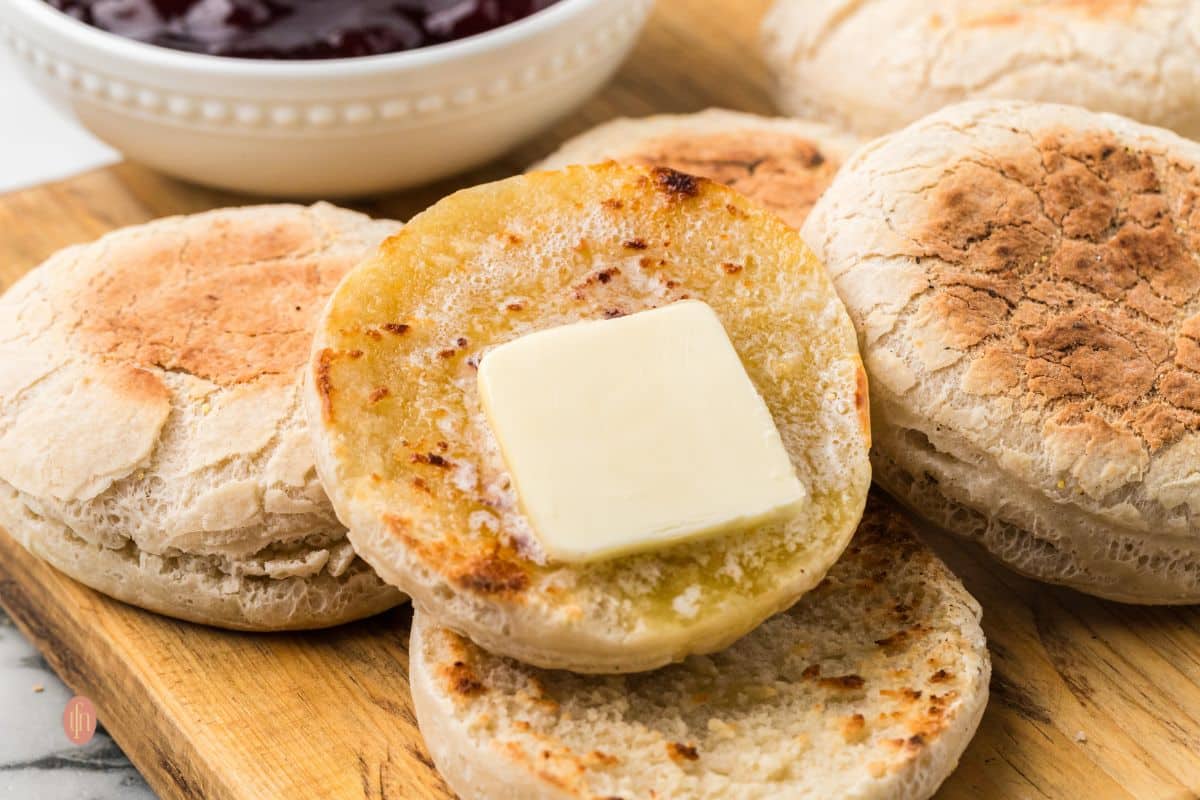
There’s something so satisfying about pulling a golden, perfectly puffed English muffin off the skillet and watching the steam rise as you split it open with a fork. All those beautiful nooks and crannies waiting for butter to melt into every little crevice. That’s the moment that makes this recipe worth every bit of the wait.
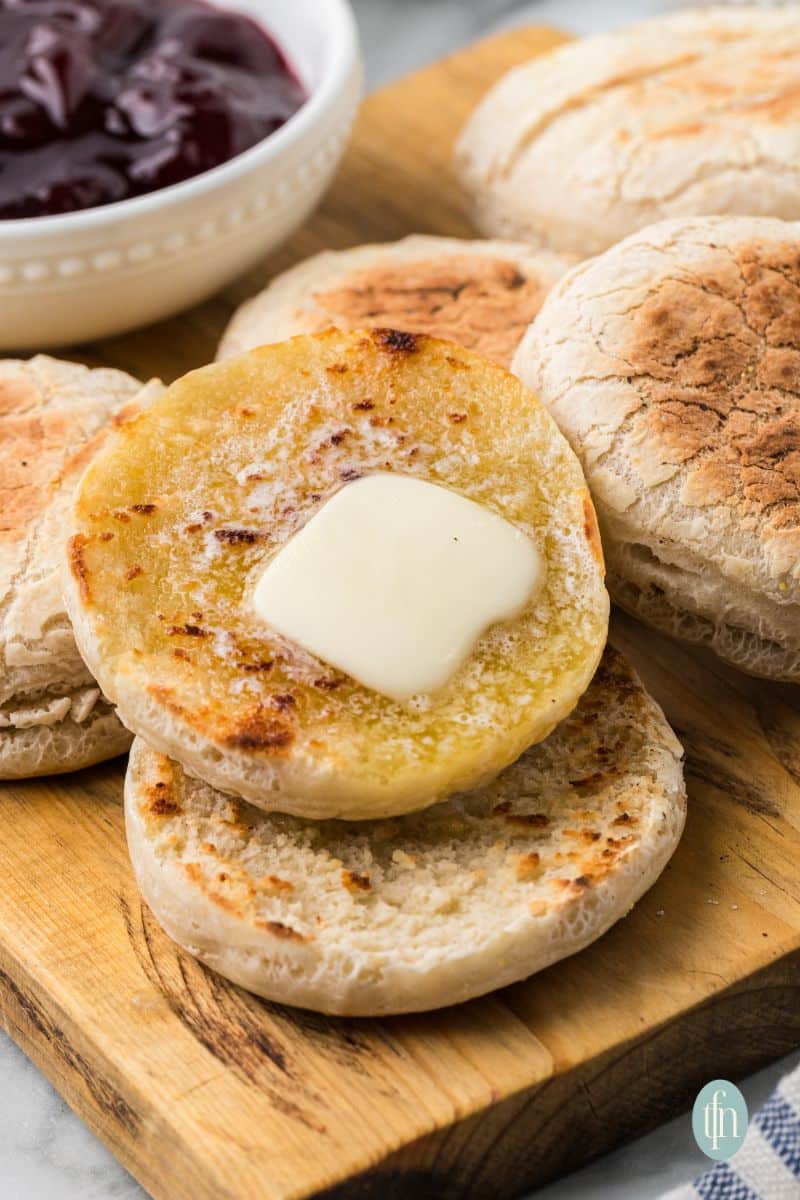
These sourdough English muffins have become one of my favorite ways to use up sourdough discard. Instead of tossing that precious starter, you get soft, pillowy muffins with just the right amount of chew and that signature sourdough tang. They’re perfect for lazy weekend breakfasts, meal-prepped breakfast sandwiches, or simply toasted with butter and jam when you need a cozy moment.
If you’ve been looking for an easy sourdough discard English muffins recipe that actually delivers on texture and flavor, this is the one. No oven required. Just a skillet, a little patience, and you’ll have homemade English muffins that put the store-bought kind to shame.
We love sharing creative sourdough recipes, and if you’re feeling inspired after making this sourdough English muffin bread recipe, check out our Dutch oven sourdough bread—a rustic, crusty loaf that’s a staple in any sourdough baker’s kitchen. Or, for a savory twist, our garlic sourdough bread adds herby flavor to your favorite meals.
Content Covered Here
Sourdough English Muffins Recipe Video Tutorial
What Makes This Sourdough English Muffins Recipe Different
It’s the perfect way to use sourdough discard. Instead of tossing that precious starter, turn it into something delicious. This sourdough discard English muffins recipe makes your discard work double duty. No waste, all reward.
Stovetop cooking means no oven required. Just a skillet and some patience, and you’ll get those signature golden crusts with soft, chewy centers. Cooking low and slow on the stovetop is what creates all those beautiful nooks and crannies inside.
Flexible rise time works with your schedule. Whether you mix the dough in the morning and cook in the evening, or let it rise overnight for breakfast, the bulk fermentation chart in this recipe helps you plan around your kitchen’s temperature. No guessing required. We have a rising times guidelines chart in the recipe below.
They freeze beautifully for busy mornings. Make a batch and enjoy one warm off the skillet, then stash the rest for quick breakfasts and meal prep. They’re perfect for breakfast sandwiches, or just toasted with butter and jam whenever the craving hits.
We love all things sourdough, have you tried our sourdough pizza dough or our sourdough bread bowls recipes?
Ingredient Notes and Substitutions
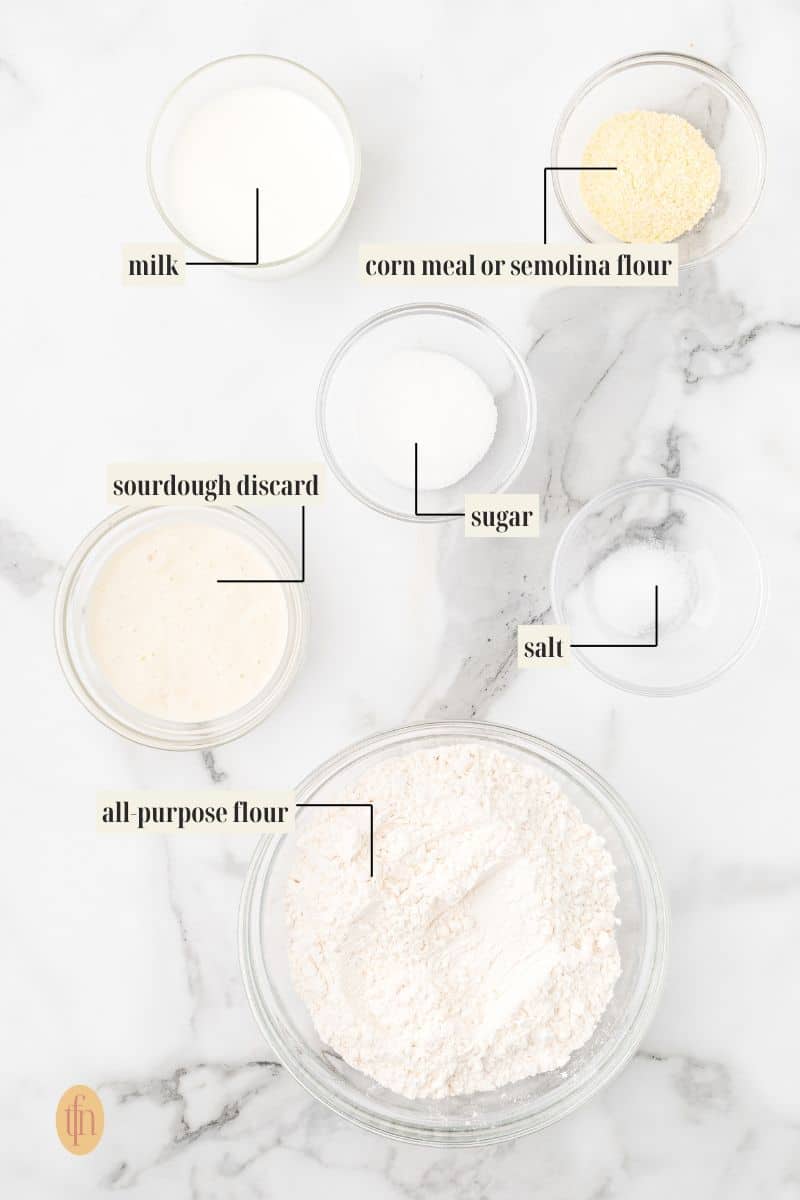
- Sourdough discard: Use discard or starter that has been fed 12 to 24 hours before making this recipe. Your starter should still have some bubbles and activity to it. If your discard has been sitting in the fridge for more than a week and looks flat or has a lot of liquid on top, give it a fresh feeding first for best results.
- Milk: Whole milk gives these English muffins a tender, rich texture, but you can substitute with almond milk, oat milk, soy milk, or water. Keep in mind that using water will produce a slightly less soft muffin, though still delicious.
- All-purpose flour: This is my go-to for a light, tender crumb. Bread flour also works well and will give you a slightly chewier texture with more structure. If you want to add whole grains, you can swap up to half of the all-purpose flour with whole wheat flour for a heartier muffin.
- Salt: Do not skip this! Salt strengthens the gluten structure and balances the tanginess of the sourdough. Plain table salt, sea salt, or kosher salt all work. If using kosher salt, you may need slightly more since the flakes are larger.
- Sugar: A small amount of sugar feeds the yeast and helps with browning. You can swap with an equal amount of honey or maple syrup if you prefer. The flavor difference is subtle but adds a nice touch.
- Cornmeal or semolina flour: This is what gives English muffins that classic textured crust and prevents sticking. Dust your work surface and skillet generously. You can use regular flour in a pinch, but you’ll lose some of that signature crunch on the outside.
Recipe Variations
- Swap in whole wheat flour for up to half of the all-purpose flour to give your English muffin sourdough bread a heartier texture and a slightly nutty flavor. It’s a great way to add whole grains without sacrificing softness.
- Brush the skillet with unsalted butter instead of using cornmeal or semolina. This gives the muffins a golden, crisp crust and a rich buttery flavor.
- Incorporate shredded cheese and herbs (like cheddar and chives or parmesan and thyme) for a savory version that’s served alongside soups or stews.
- Stir in cinnamon and a touch of brown sugar before the final roll-out for a lightly spiced twist that pairs perfectly with honey butter.
Craving more of a sweet breakfast treat? Try our coffee cake muffins and Bisquick banana muffins. Or if you can’t get enough of this, try more of our sourdough breakfast recipes!
Equipment Used in this Recipe
- Large bowl
- Whisk
- Rolling pin
- 3½” biscuit cutter or wide mouth Mason jar ring – optional, see recipe card instructions
- Parchment paper – optional
- Baking Sheet
- 10″ to 12″ skillet – seasoned cast iron or non-stick
- Spatula
🎯 TFN Pro Tip
Want to get the best rise and texture in your sourdough? Check out our tips on proofing sourdough to make sure your dough is ready for baking!
How to Make Sourdough English Muffin Bread Recipe
- Mix the dough
Combine your sourdough starter discard, milk, and sugar using a whisk in a large bowl.
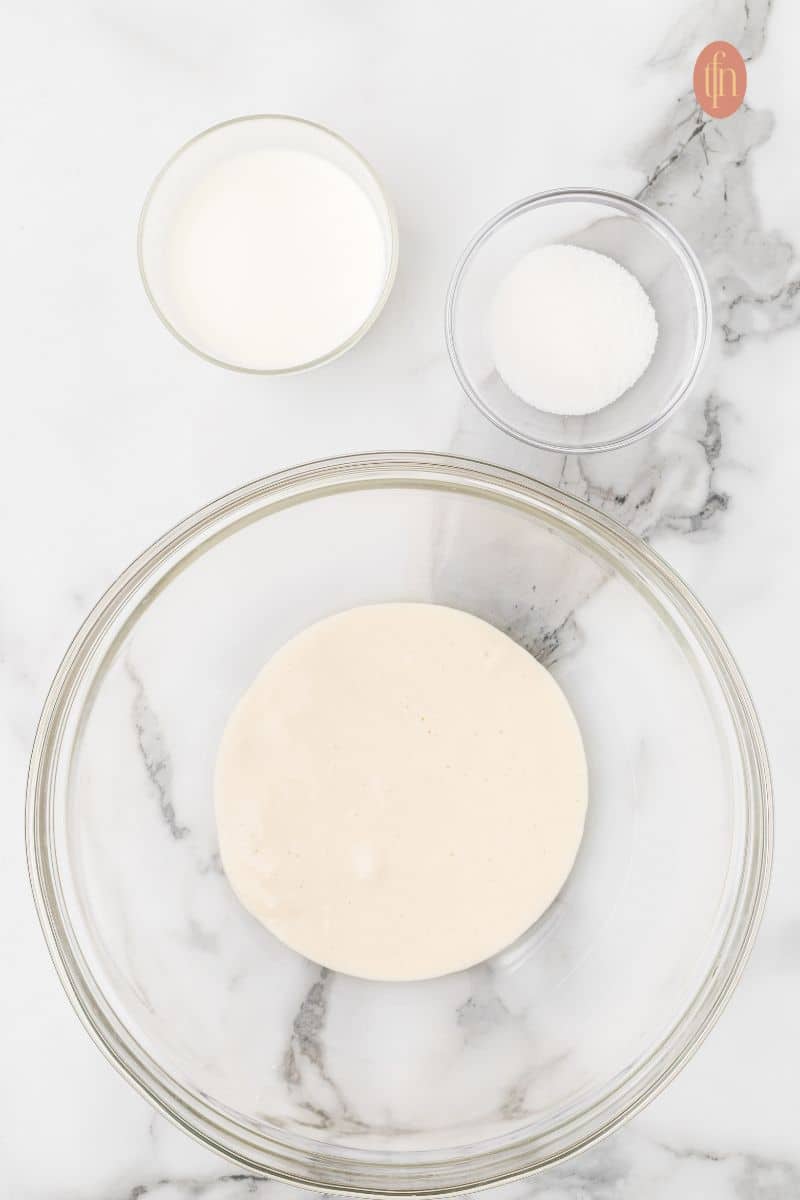
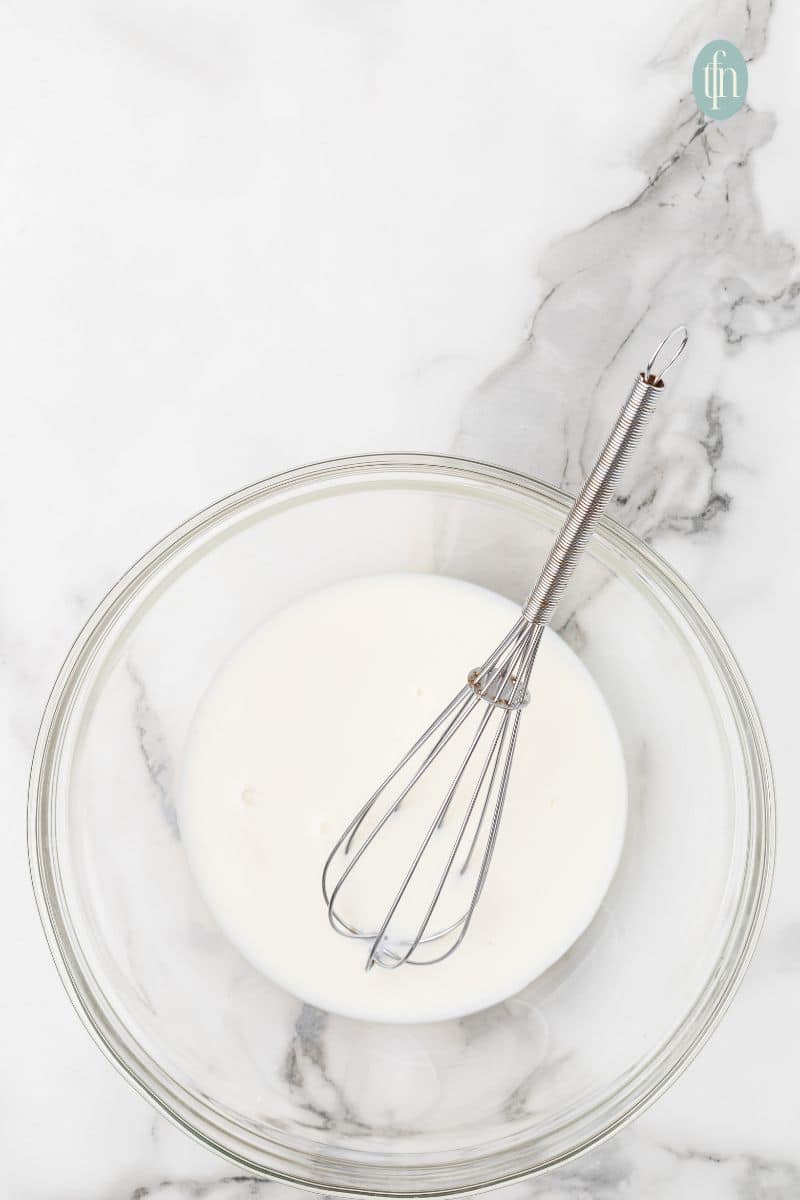
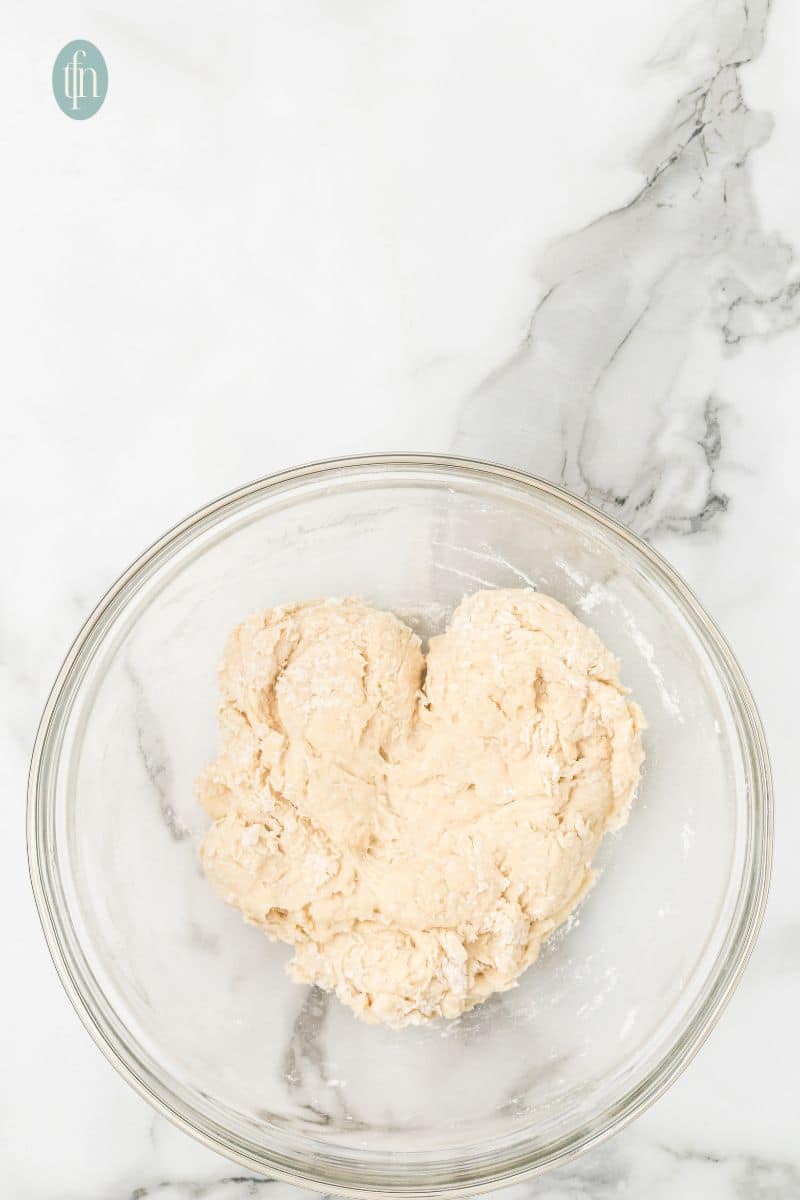
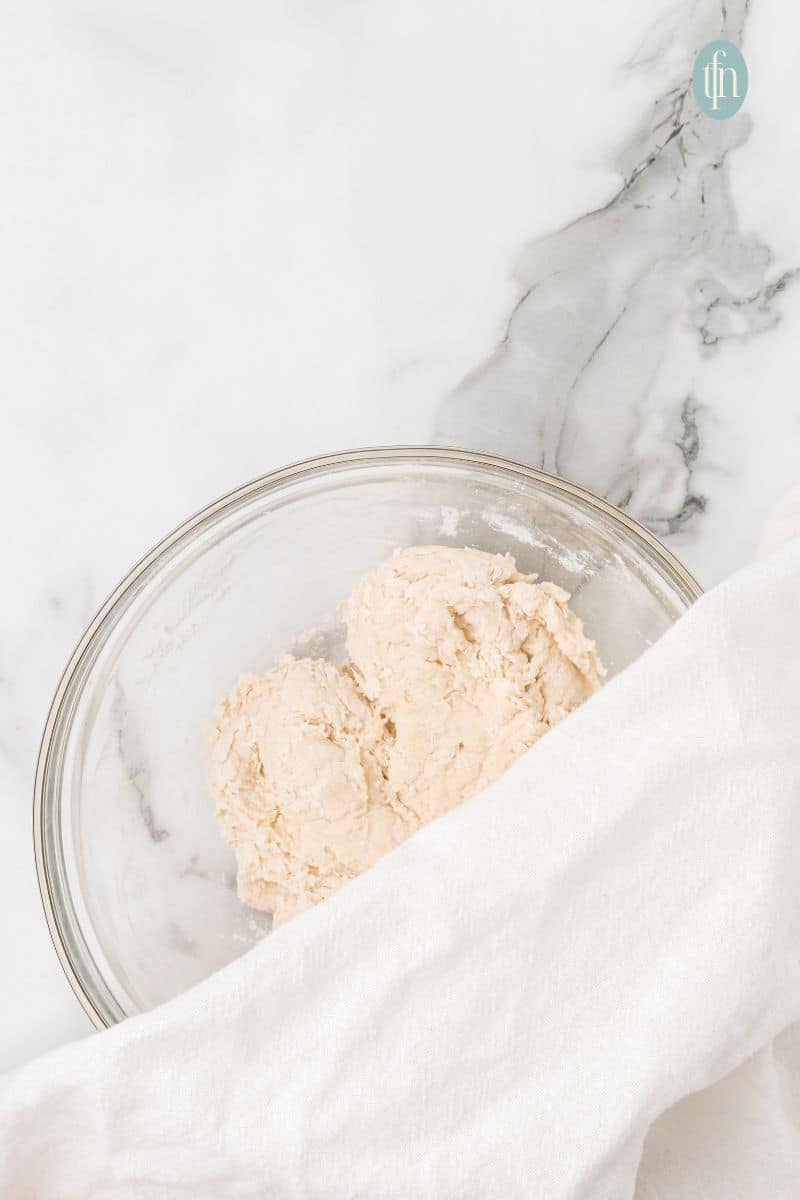
- Add flour and salt to the milk mixture and mix until a shaggy dough forms. Let it rest for 45 minutes.

- Stretch and fold
Perform a series of stretch and folds until the dough is smooth and elastic. - Bulk fermentation rise
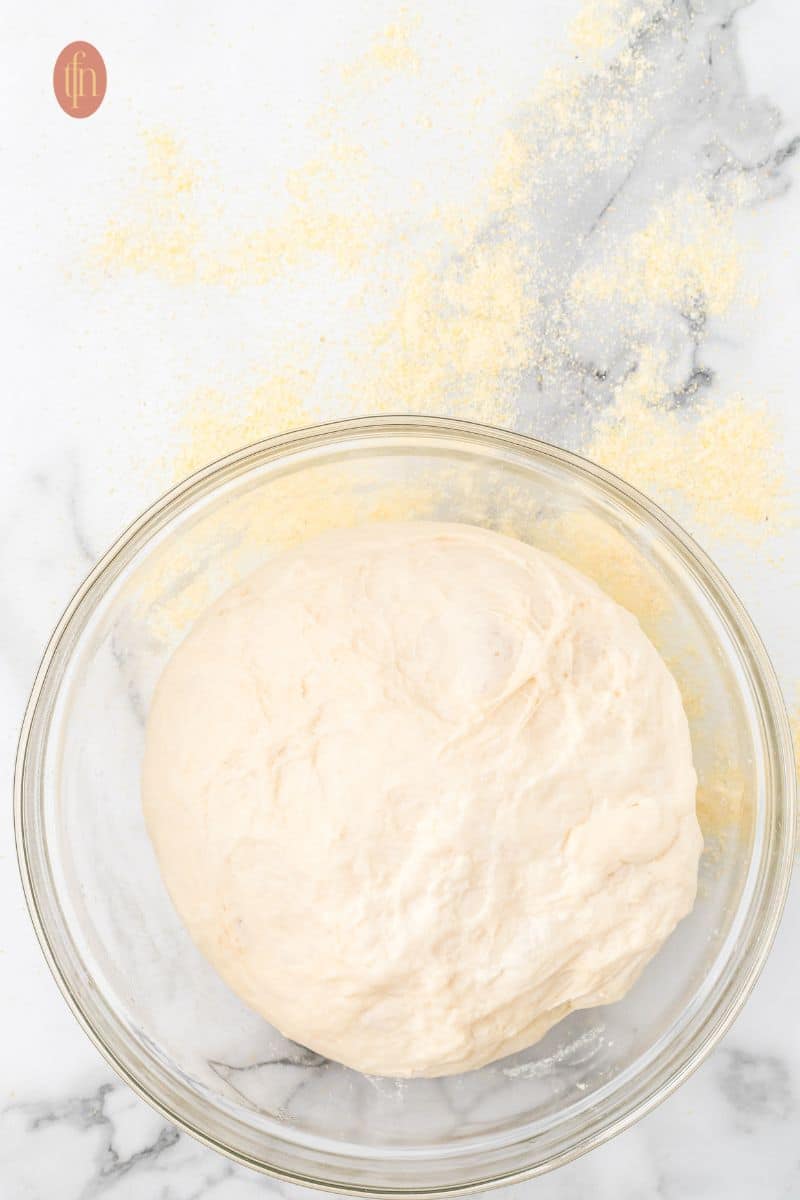
Cover the bowl and let the dough ferment at room temperature for about 8 hours or overnight.
- Roll and cut
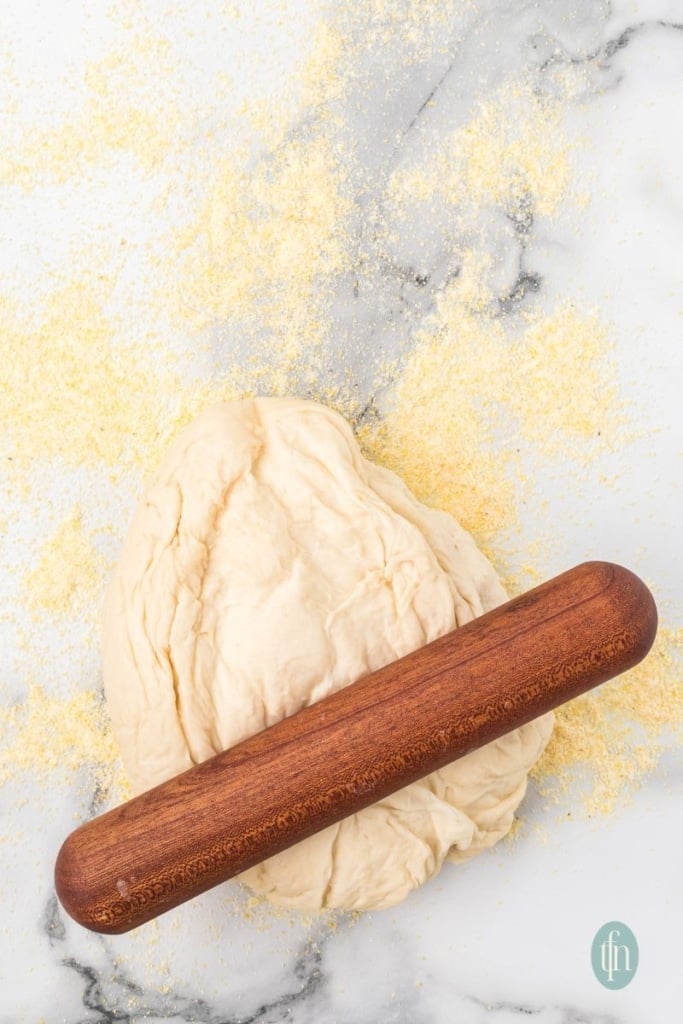
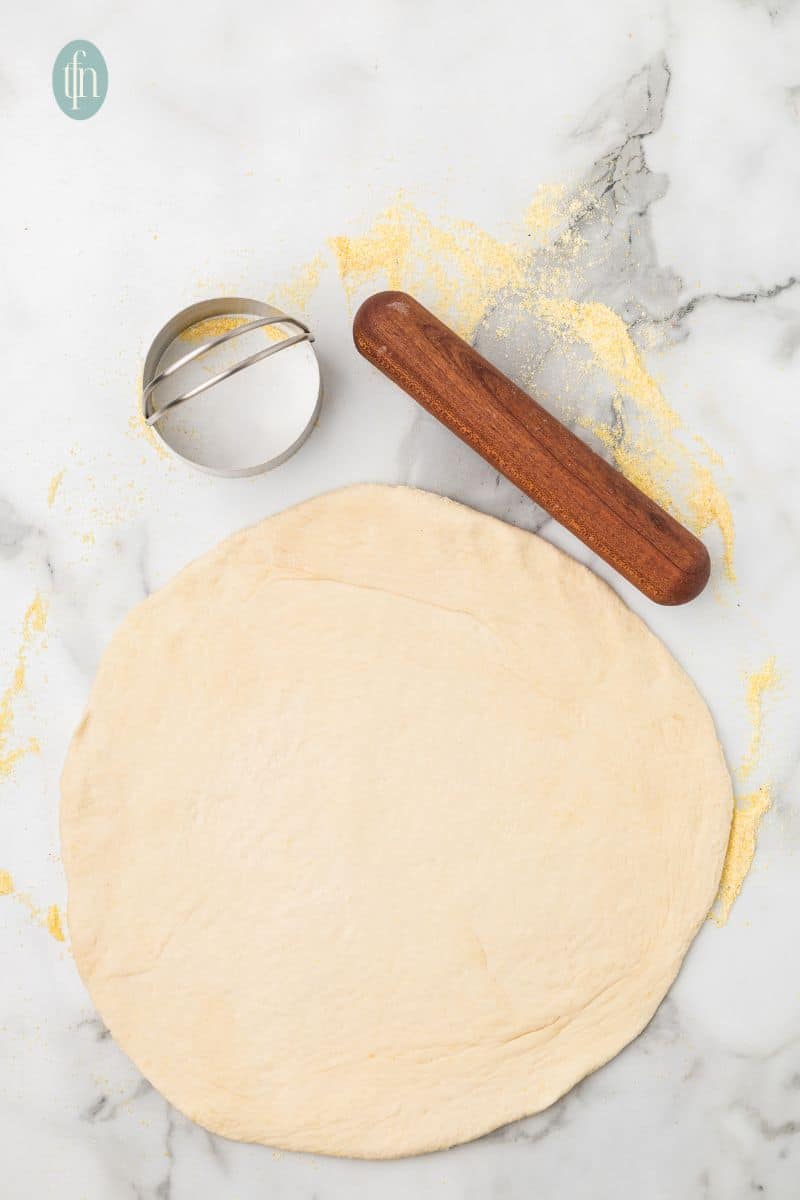
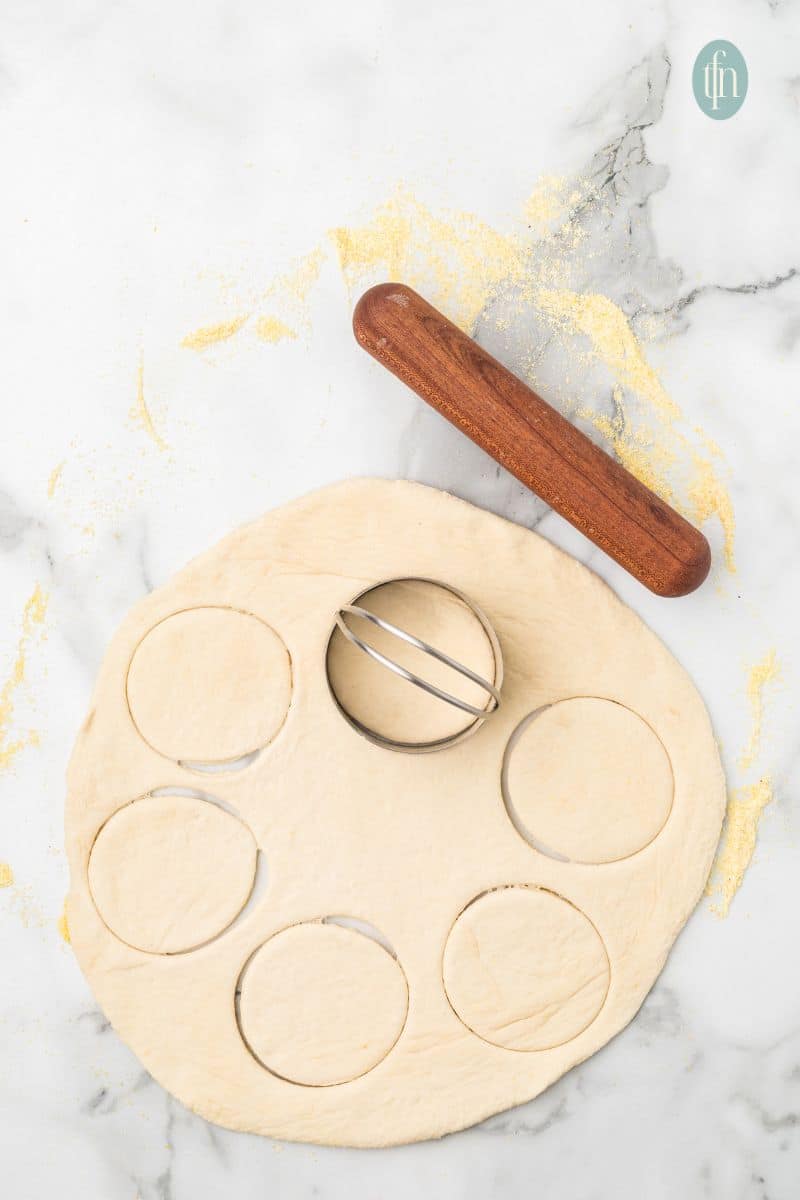
After the long rise, roll the dough out to ½-inch thick on a floured surface. Cut into rounds using a biscuit cutter or mason jar ring—or shape into rounds by hand.
- Second rise
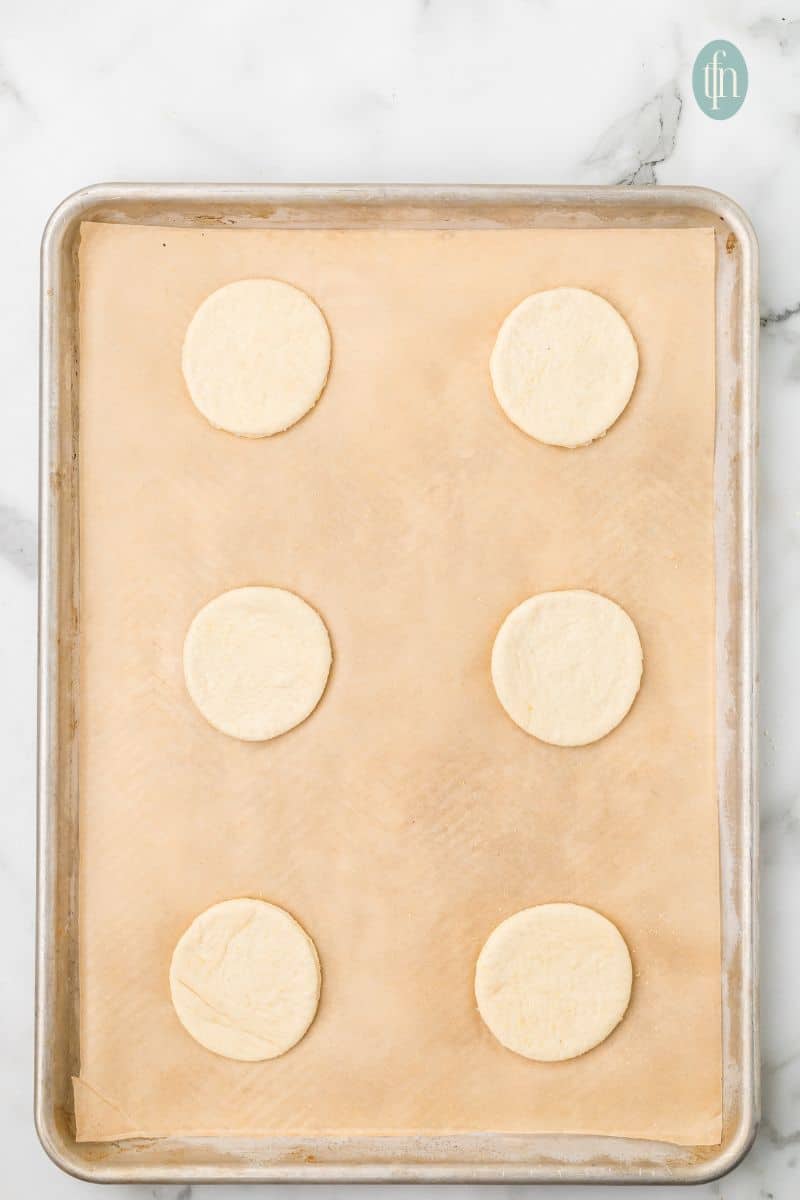
Place the muffins on a parchment-lined baking sheet, cover, and let them rise again or proof for 1–2 hours until slightly puffy.
🎯 TFN Pro Tip
Watch the rise, not the clock.
Rise times depend on your kitchen’s temperature—warm rooms speed things up, cooler ones slow it down. Instead of watching the clock, watch your dough! It should look soft, puffy, and have a noticeable rise. For cooler kitchens, place the dough in a turned-off oven with the light on to help it along (monitor the temperature to ensure it doesn’t get too hot).
- Cook on the stovetop
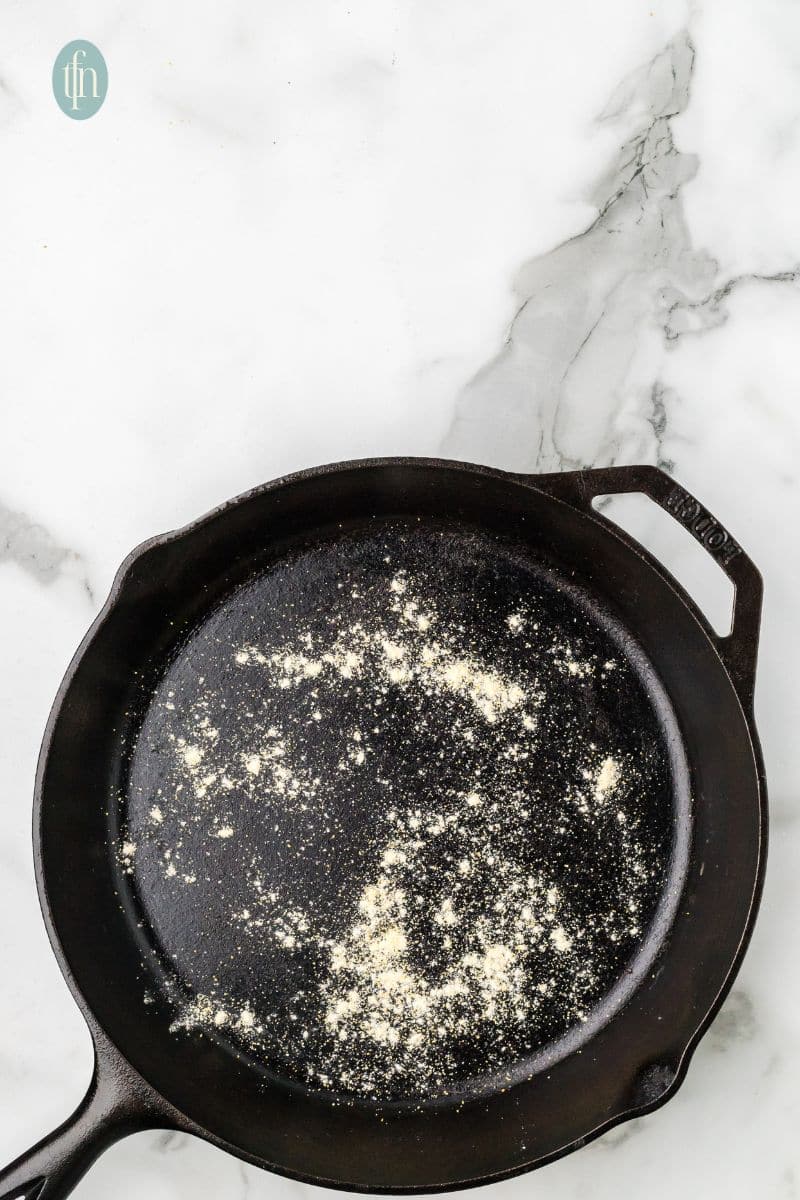
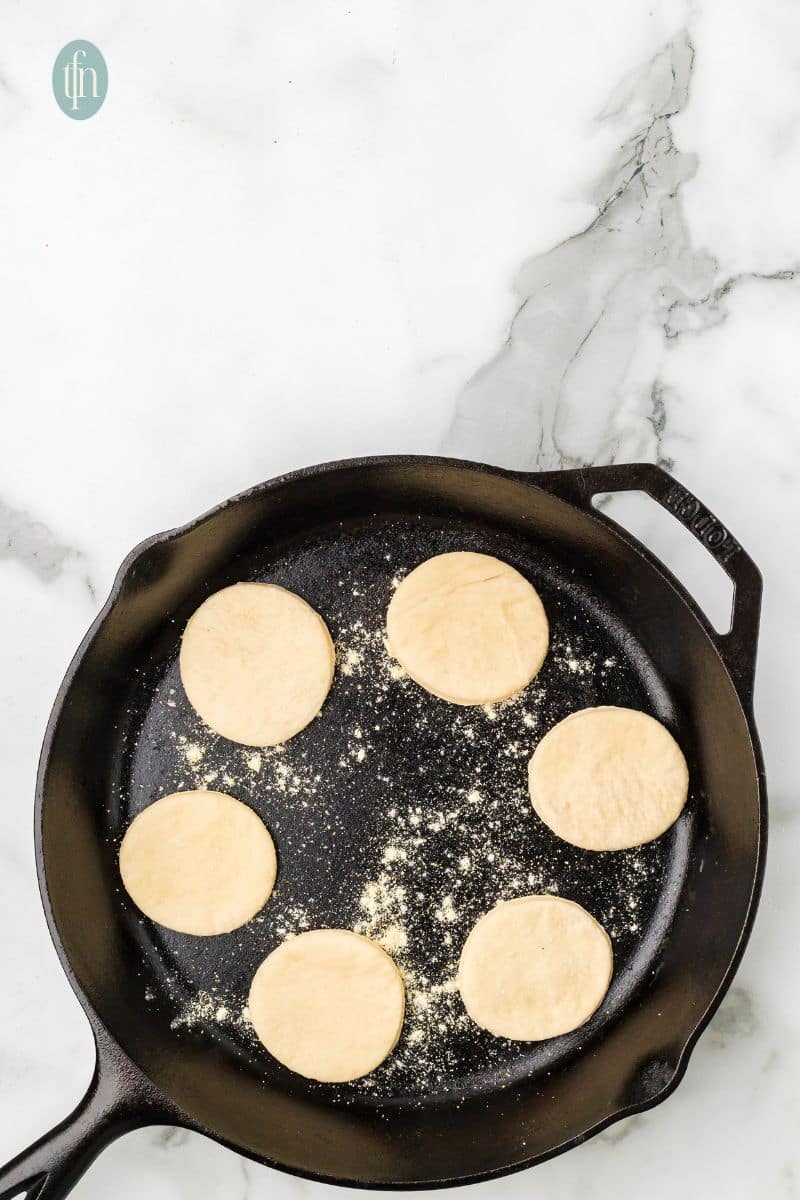
Preheat a skillet over medium-low heat and dust with cornmeal or semolina. This prevents the dough from sticking and gives your muffins that signature textured finish on the outside.
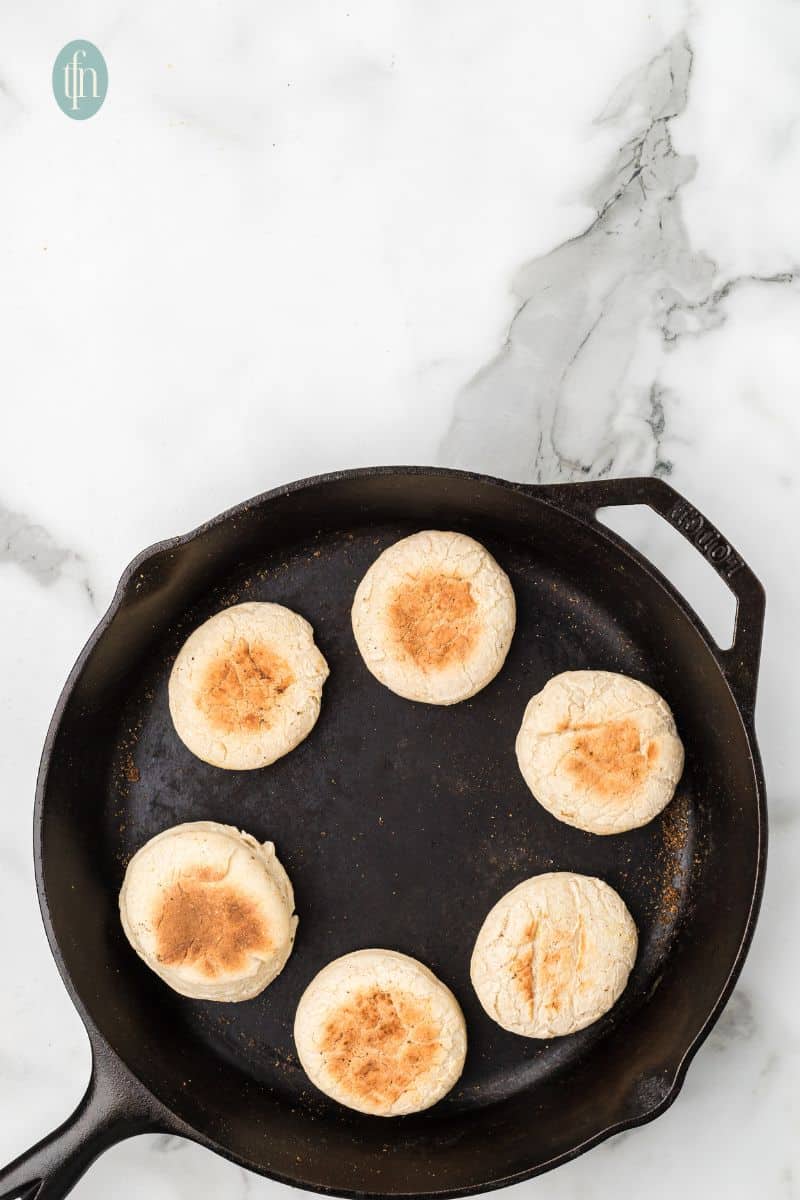
Cook the muffins for 10–15 minutes per side, until golden brown and cooked through. The internal temperature should around 200ºF.
- Cool and enjoy
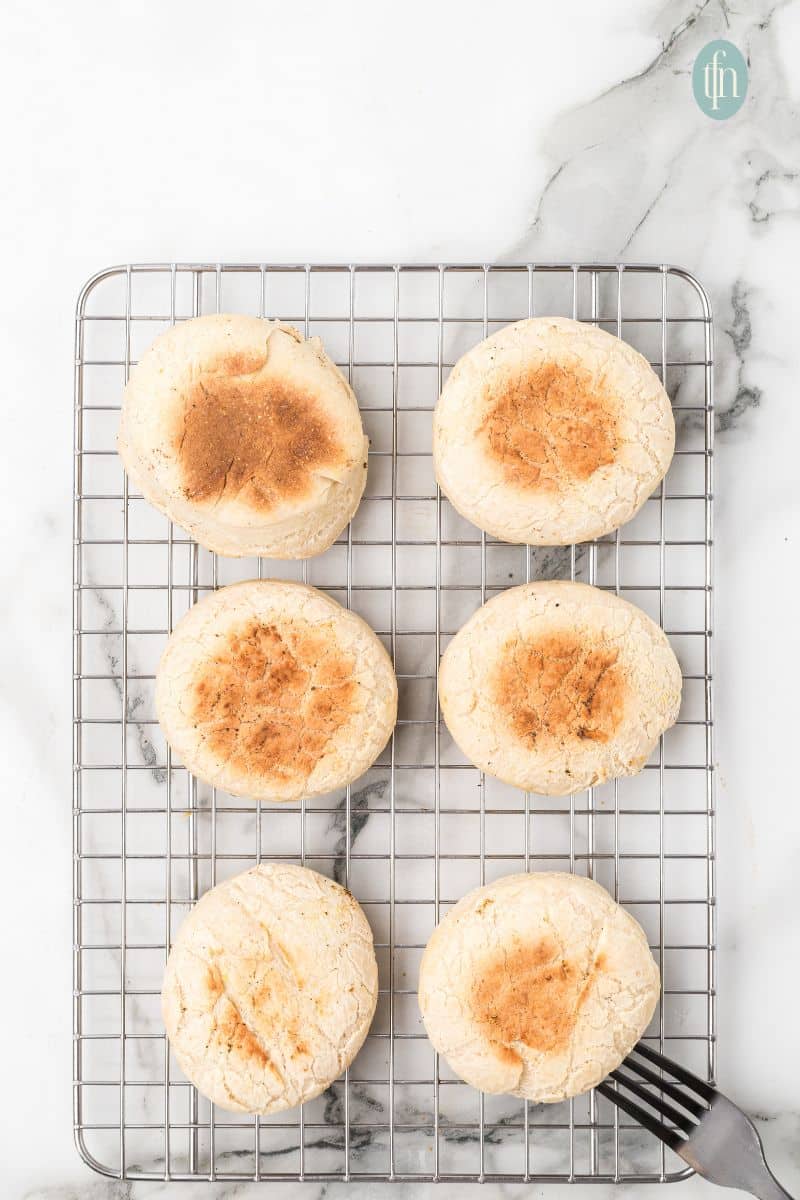
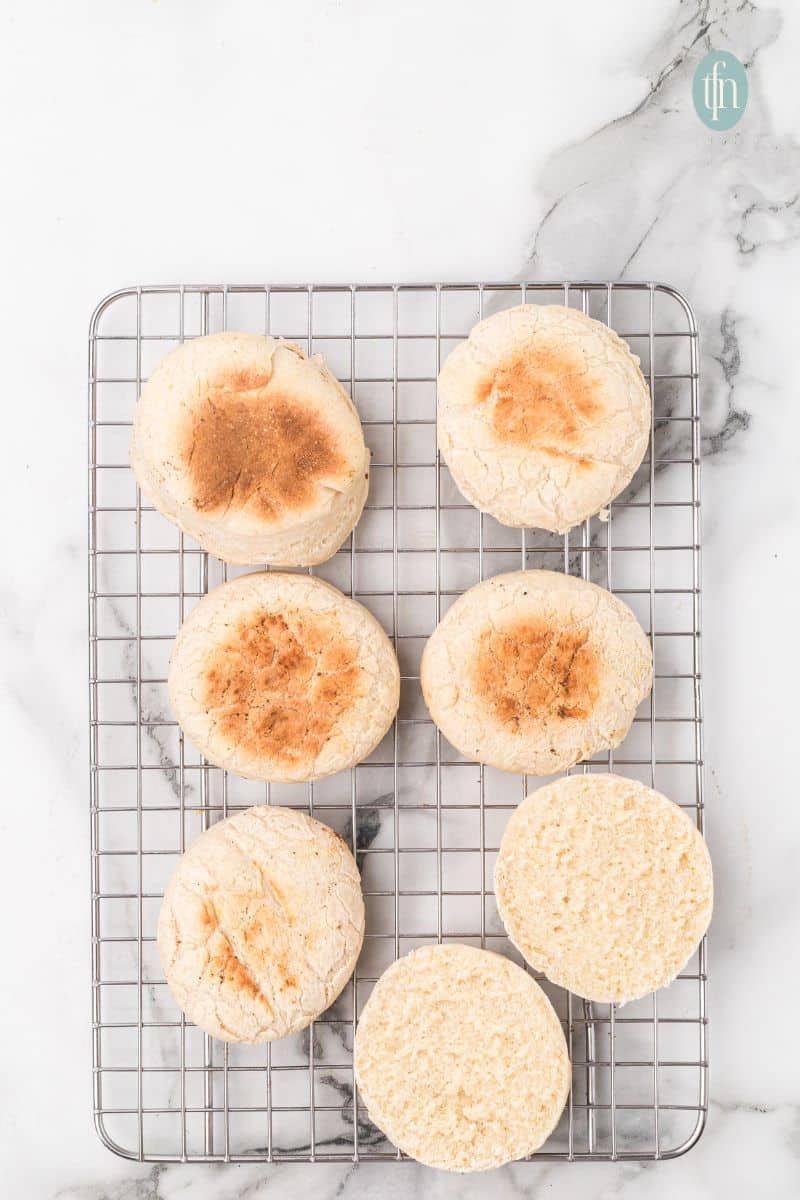
Let the sourdough English muffin bread cool on a wire rack, then split with a fork and serve toasted with your favorite toppings.
🎯 TFN Pro Tip
Don’t skip the fork-splitting—seriously!
For those classic nooks and crannies, resist the urge to slice with a knife. Instead, use a fork to pierce all the way around the muffin, then gently pull it apart. This preserves the air pockets and makes each muffin perfect for melting butter or holding onto jam.

Troubleshooting Sourdough English Muffins
My English muffins are flat like pancakes. This usually means the dough needs more flour or your starter wasn’t active enough. The dough should be soft but hold its shape when you cut it into rounds. If it spreads out immediately, knead in a bit more flour before rolling. Also make sure your sourdough starter was bubbly and active when you mixed the dough.
The outside is burning before the inside cooks through. Your heat is too high. These need to cook low and slow over medium-low heat for 10 to 15 minutes per side. If you’re unsure, use an instant-read thermometer and cook until the internal temperature reaches 200°F. Covering the skillet with a lid for part of the cooking time also helps the inside cook evenly without over-browning the crust.
I’m not getting nooks and crannies inside. First, make sure you’re splitting the muffins with a fork instead of cutting with a knife. Pierce the fork all the way around the edge, then gently pull the two halves apart. This preserves the air pockets that create those signature holes. If the inside is still dense, your dough may have needed a longer rise or your starter may not have been at its peak.
The dough is too sticky to work with. Sourdough English muffin dough is naturally softer than regular bread dough, but it shouldn’t stick to everything. Dust your work surface generously with flour or cornmeal, and flour your hands before handling. If you live somewhere humid or warm, try reducing the milk by about 30 grams next time.
My muffins didn’t rise much during the second proof. Temperature plays a big role here. If your kitchen is cool (under 70°F), the second rise can take longer than the 1 to 2 hours listed. Look for the dough to appear puffy and slightly increased in size rather than watching the clock. You can place the baking sheet in your oven with just the light on to create a warmer environment.
Serving Suggestions
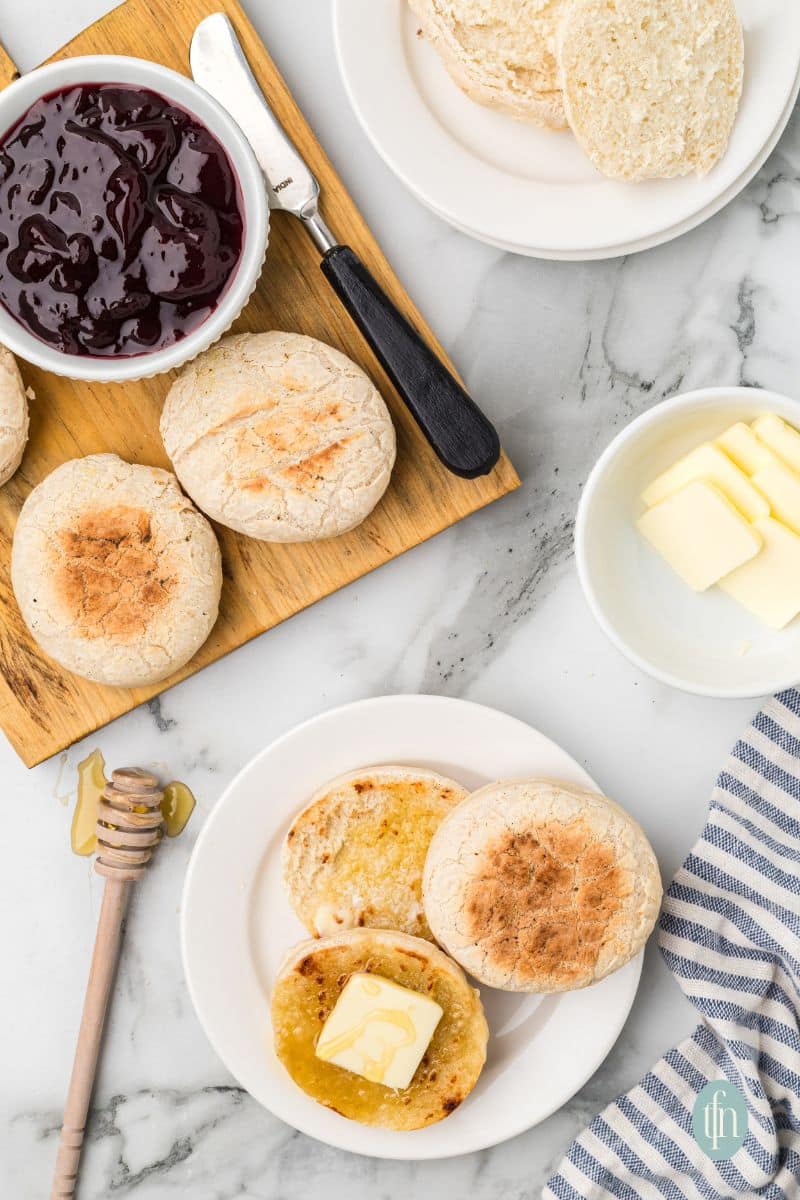
These sourdough English muffins are the ultimate canvas for all your favorite breakfast flavors. Toast them up and top with soft scrambled eggs and crispy bacon for a classic breakfast sandwich, or keep it simple with a generous swipe of butter and a spoonful of your favorite jam. They also make a delicious base for eggs Benedict or as a hearty side to a morning frittata.
Or if you prefer bagels over English muffins, we have a Sourdough Bagel recipe.

Recipe FAQs
Cooking on a skillet gives these muffins their signature golden crust and helps form those classic nooks and crannies inside. It’s part of what sets them apart from regular baked bread!
Yes, this recipe needs a long fermentation rise that’s about 8 hours long (see the recipe notes for more detail). You can do the rise during the day or overnight.
The best way to ensure you get plenty of nooks and crannies is to use a fork to split the muffins instead of cutting with a knife. Pierce the fork all the way around the edge, then gently pull the two halves apart.
Absolutely! Once the muffins are fully cooled, store them in a freezer-safe container or bag. They’ll keep for up to one month. Just toast them straight from the freezer when you’re ready to enjoy.
Traditional store-bought English muffins are made with commercial yeast, not sourdough. However, the original English muffins dating back hundreds of years were likely made with wild yeast starters similar to what we call sourdough today. This recipe brings back that classic method, giving you English muffins with authentic tangy flavor and better texture than anything from the grocery store.
More Easy Sourdough Recipes to Love…
If you tried this sourdough English muffins recipe or any other recipe on my website, please leave a 🌟 star rating and let me know how it went in the 📝 comments below. Follow us on Facebook, Pinterest, or Instagram for more. Thanks for visiting!

Sourdough English Muffins
Equipment
- Biscuit cutter - 3½" or wide mouth Mason jar ring – optional, see instructions
- parchment paper - optional
- skillet - 10" to 12", seasoned cast iron or non-stick
- spatula
Ingredients
- ¼ cup sourdough discard discard or fed 12-24 hours prior
- ½ cup milk can use non-dairy milk like almond or soy milk or water
- 1 ⅔ cup all purpose flour or bread flour
- ½ teaspoon salt
- 1 tablespoon sugar
- semolina flour or corn meal optional, you can use all purpose flour
Instructions
- In a large bowl, whisk together the starter, sugar, and milk (or water) until the mixture is smooth and well combined. Add the flour and salt. Mix until a shaggy dough forms. Cover the bowl and let rest for 45 minutes.
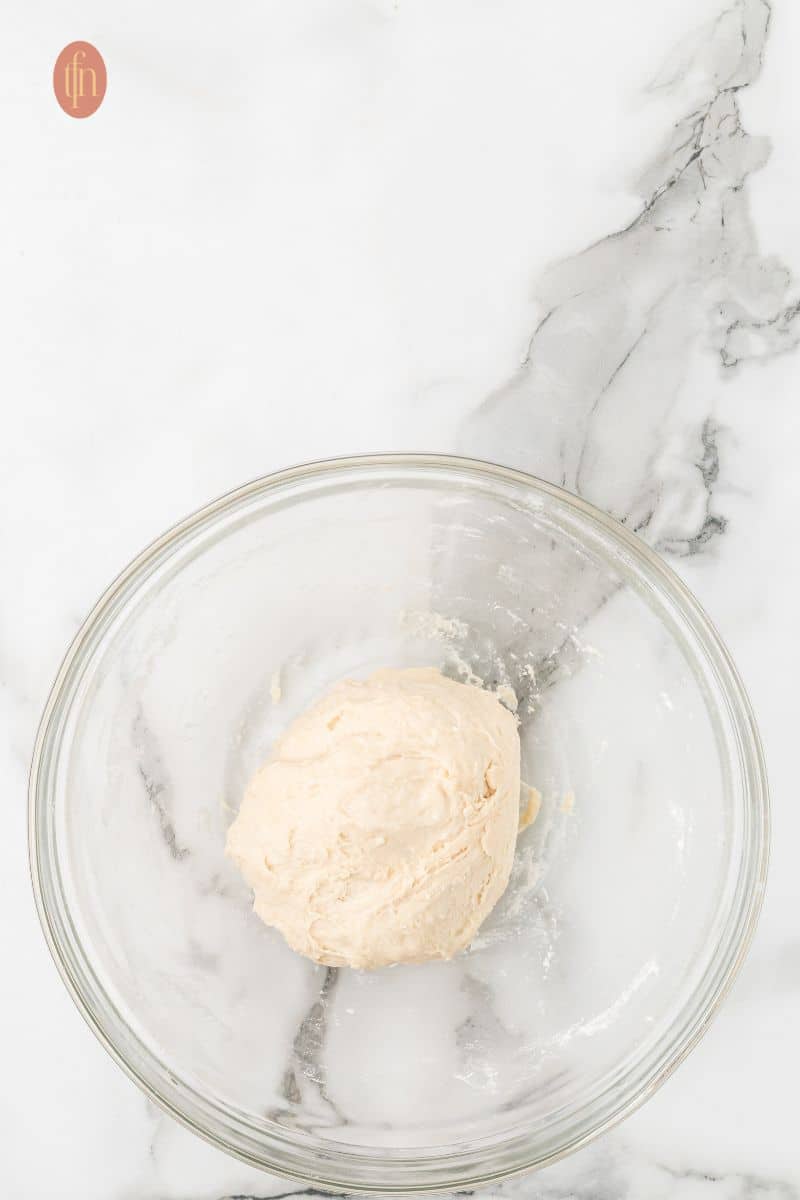
- Do a series of stretches and folds by pulling a side section of the dough up about 5 inches and pressing it back down into the center of the dough. Rotate the bowl a 1/4 turn and repeat the process until you have stretched and folded the whole ball of dough and the dough is tight and smooth. This process should take less than a minute.
- Return the dough to the bowl, cover with a damp towel (or plastic wrap if you live in a dry area) and and let rise at room temperature or a warm area about 8 hours (see chart in notes) for the bulk fermentation rise.
- After the bulk rise, gently turn your dough out onto a corn meal or semolina flour covered surface (you can use flour instead).
- Using a rolling pin, roll the dough out into a circle about 1/2-inch thick. Use a 3½" biscuit cutter or wide mouth mason jar ring to cut out your sourdough English muffins. *If you do not have a biscuit cutter or mason jar ring, cut the dough into 6 pieces. Roll each piece into a ball, then roll out to 1/2" thickness with a rolling pin.
- Place cut muffins on a parchment covered (or greased) baking sheet. Cover with a damp tea towel or greased plastic wrap and let rise at room temperature for 1 – 2 hours, until they have risen slightly and are puffy.
- Preheat cast iron skillet or non-stick skillet over medium-low heat.
- Sprinkle a little cornmeal or semolina flour into the skillet (to prevent sticking). Carefully place the muffins in the skillet and cook until the bottoms are lightly browned and sides are dry, about 10-15 minutes. Flip the muffins with a spatula and cook for an additional 10-15 minutes.
- Transfer the English muffins to a wire rack and let cool for 10 minutes.Use a fork to pierce the edges of the English muffin all the away around, then split in half.
- Serve with butter, honey, or jelly. Or use them to make a breakfast sandwich.
Video

Notes
- Use whole wheat flour for up to half of the all-purpose flour for whole wheat English muffins. They have a heartier texture and a slightly nutty flavor.
- Add shredded cheese and herbs (like cheddar and chives or parmesan and thyme) for herb sourdough English muffins to serve with soups or stews.
- Sprinkle with cinnamon and abrown sugar after the final roll-out for cinnamon sugar English muffins that pair perfectly with honey butter.
- 80ºF about 4-5 hours
- 75ºF about 6-7 hours
- 70ºF about 8-9 hours
- For temperatures under 70ºF it can take up to 12 hours or more
- Place the bowl in the oven with the door closed and light on to create a slightly warmer climate without actually turning the oven on.
- Use a heated mat (like those used for germinating seeds) for rising.
- Use the “proof” setting of your oven (I set mine to 85ºF) and set a timer. This will speed up the rising process, so check it at 4 and 6 hours.
- If there is a sunny room in the house that stays warm, keep the dough covered in that area.
- Watch the rise, not the clock. Rise times depend on your kitchen’s temperature—warm rooms speed things up, cooler ones slow it down. Instead of watching the clock, watch your dough! It should look soft, puffy, and have a noticeable rise. For cooler kitchens, place the dough in a turned-off oven with the light on to help it along (monitor the temperature to ensure it doesn’t get too hot).
- Don’t skip the fork-splitting. For those soft, nooks and crannies you see when you split open your muffin be sure to resist the urge to slice with a knife. Instead, use a fork to pierce all the way around the muffin, then gently pull it apart.
- Use semolina or cornmeal to avoid sticking and to get that bakery-style crunch. Sprinkling a bit of semolina or cornmeal onto your work surface and your skillet not only prevents the dough from sticking but also gives your muffins that signature textured finish on the outside.
- Store leftovers at room temperature in an airtight container for up to 3 days.
- For longer storage, keep in a freezer-safe container in the freezer for up to 1 month. Let thaw before toasting.
- Check out our in-depth guide on how to store sourdough bread for more storage tips.
Nutrition


Pam Connelly says
The ingredient list shows milk but it is not listed in the recipe directions (unless I missed it). Can you clarify?
Gianne - TFN Team Member says
Thanks so much for pointing that out! The milk is actually mentioned in instruction number 1, but we used the term water there because you can use either milk or water in the recipe. We’ll update the wording to make that clearer so there’s no confusion in the future. Really appreciate you catching that. Thank you!
Stacy says
These turned out perfect! I was so excited to find a recipe for English Muffins that used my starter. Will be making these again and again!