

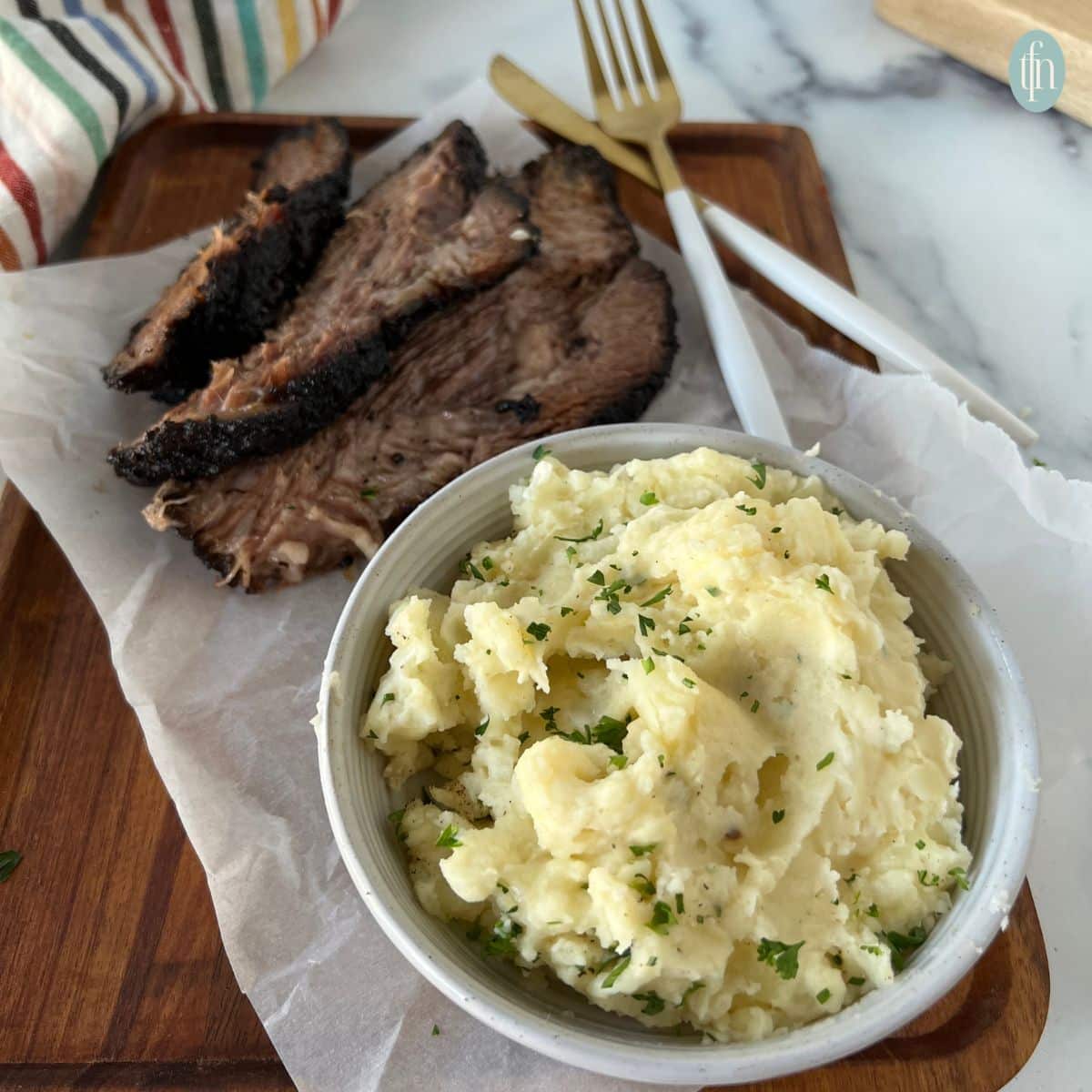
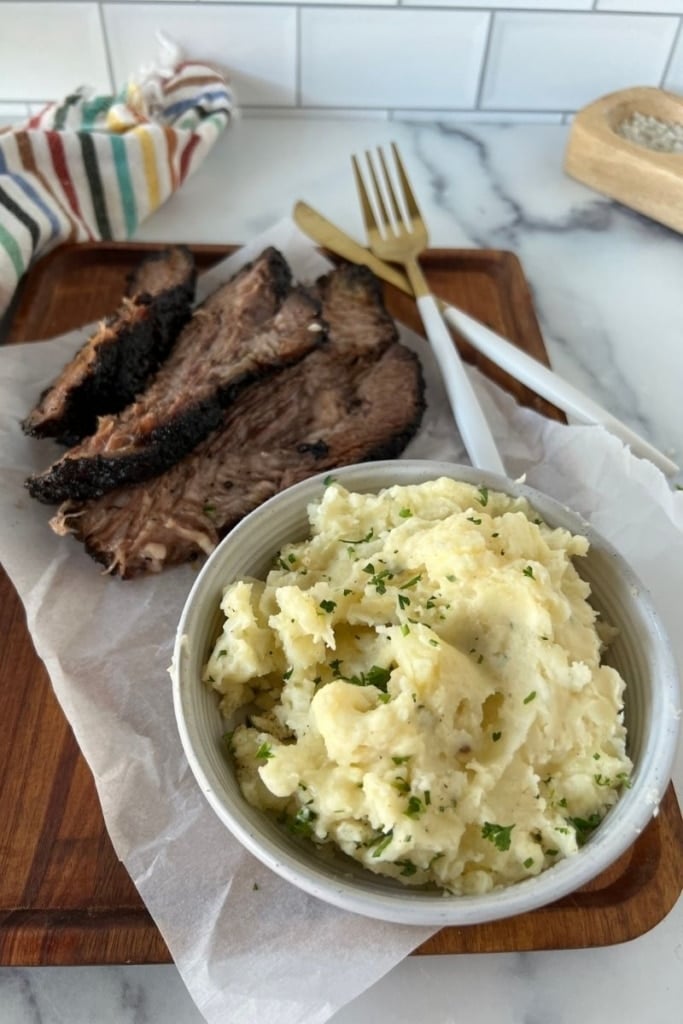
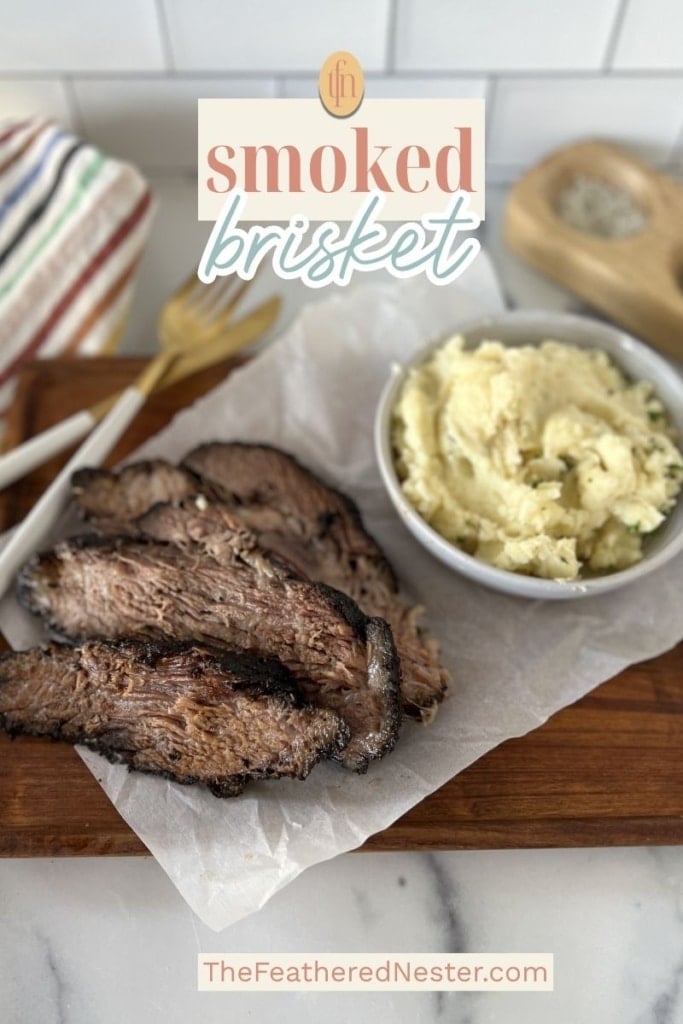
Brisket has become a family favorite in our home and it is by far our most requested meals when having people over. Years ago we tried it as a way to feed a lot of people for an event, now it is our go-to meat for holidays. Our smoked brisket recipe uses a full brisket and smokes for up to 18 hours, giving it the most tender meat with a caramelized, smokey crust. The possibilities are endless with serving brisket and the leftovers are even better!
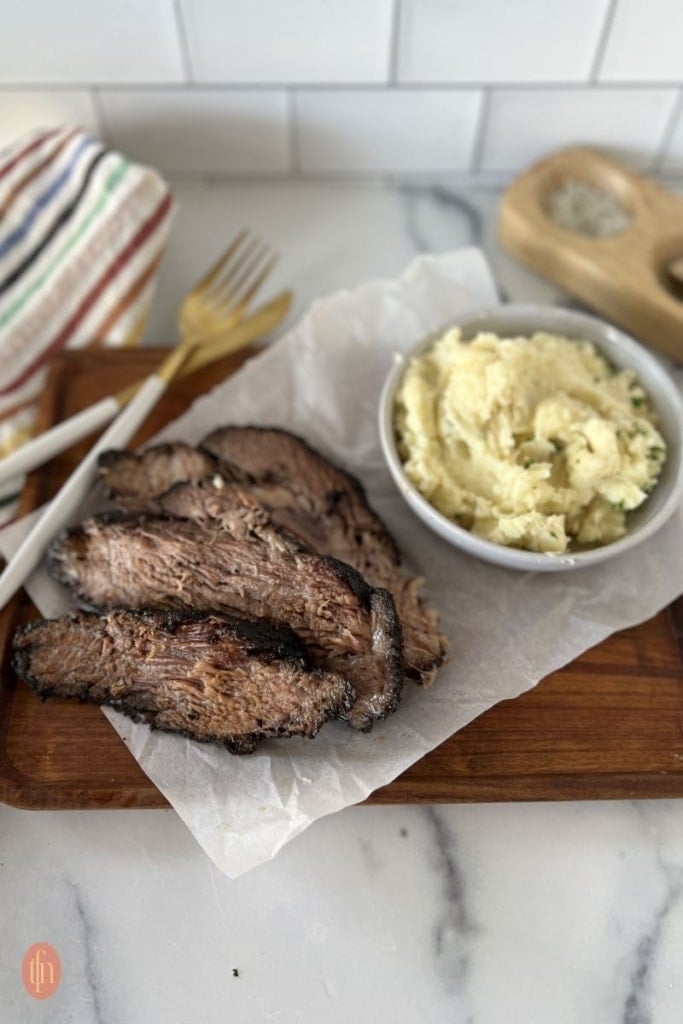
Having leftover brisket is one of my favorite parts about making it. We often argue about what we are going to use the leftovers for, my personal favorite is putting it chili, my husband prefers just reheating and eating the leftovers. The smokey flavor really comes out the next day and the leftover ideas are endless.
Content Covered Here
Why We Love Smoked Brisket Recipe
- It is a simple, hand-off recipe. You’ll season and place it on the smoker, wrap it up when it’s close to finishing and place back in smoker. It is done when it is probe tender. We have even made overnight brisket by placing it in our smoker overnight and wrapping it in the mornings, letting it cook until it was done in early afternoon.
- The leftovers are amazing, I’ve already mentioned this, but it’s worth repeating! Any leftover meat is always gone the next day- chilis, sandwiches, tacos, nachos– no matter what you pick, you can’t go wrong.
- It is a large cut of meat but a relatively low cost per pound, you get a lot of bang for your buck! Which makes it perfect for feeding a lot of people.
Ingredients and Substitutions
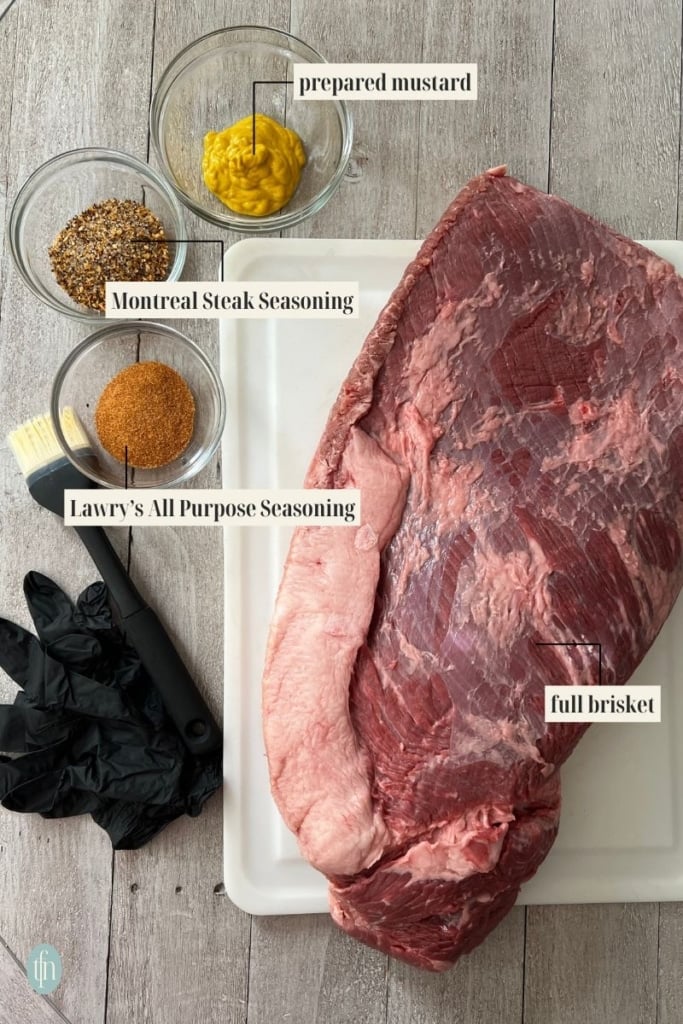
- Full brisket (around 16 pounds, point and flat)
- Mustard (yellow mustard in the bottle): After cooking you will not taste the mustard, it acts as a binder for your seasonings. You can also substitute with avocado or olive oil.
- All purpose seasoning (Montreal steak seasoning, a mixture of salt/pepper/garlic or Lawrys season salt). My husband loves adding both all purpose seasoning and Montreal steak seasoning. If you are a little more conservative with seasonings you can choose to just use salt, pepper and garlic.
Equipment
- Butcher paper (pink) or aluminum foil
- Meat thermometer with probe
- Basting brush (or gloves)
- Cutting board
How to Make Smoked Beef Brisket
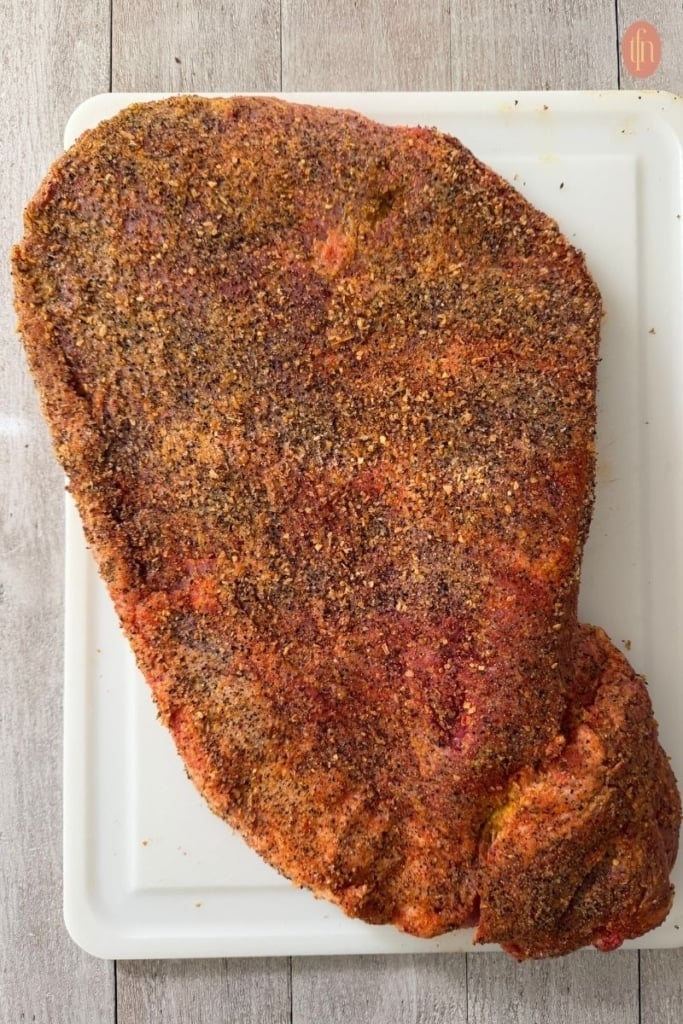
- Coat all sides of the brisket evenly with a thin layer of yellow mustard, using your hands to spread it into every nook and cranny. This acts as a binder and helps the seasoning stick.
- Season the brisket liberally on all sides with your dry rub, pressing it gently into the mustard layer so it adheres well. Do not be shy here. A good brisket needs a generous coat, it will help give the meat a good crust.
- Let the seasoned brisket rest at room temperature for 30 to 45 minutes before it goes on the smoker. This gives the rub time to work into the meat. Towards the end of this time, preheat your smoker to 225°F.
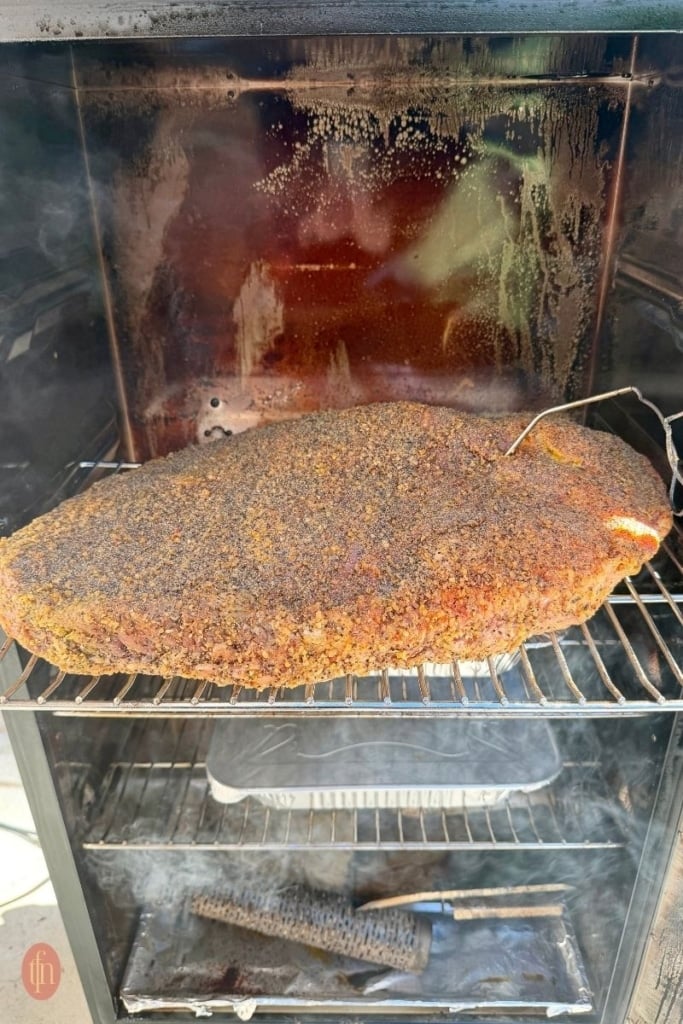
- Place the brisket fat side down and close the lid.
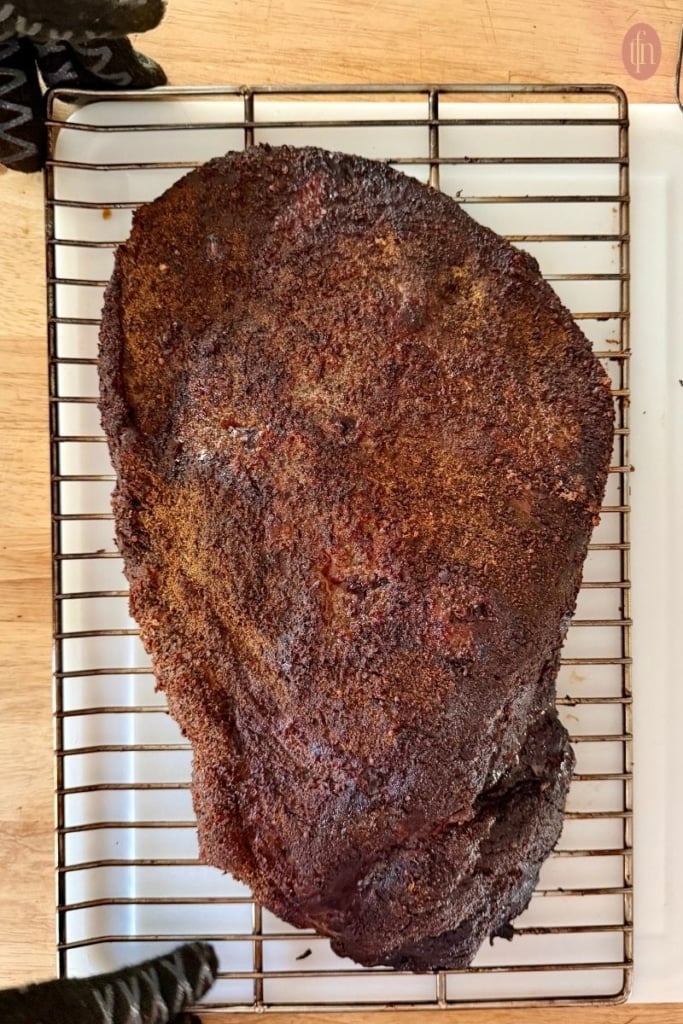
- When your meat reaches around 165°F you might notice that the temperature stops climbing (even though your smoker is still at temperature), don’t panic, this happens sometimes and it is called “the stall”. If your meat has your preferred level of bark (a firm, dark mahogany-colored crust on outside) you can carefully take the meat out of the smoker and wrap it in butcher paper. Do not wrap until your meat is at least 165°F and you have a preferred level of bark.
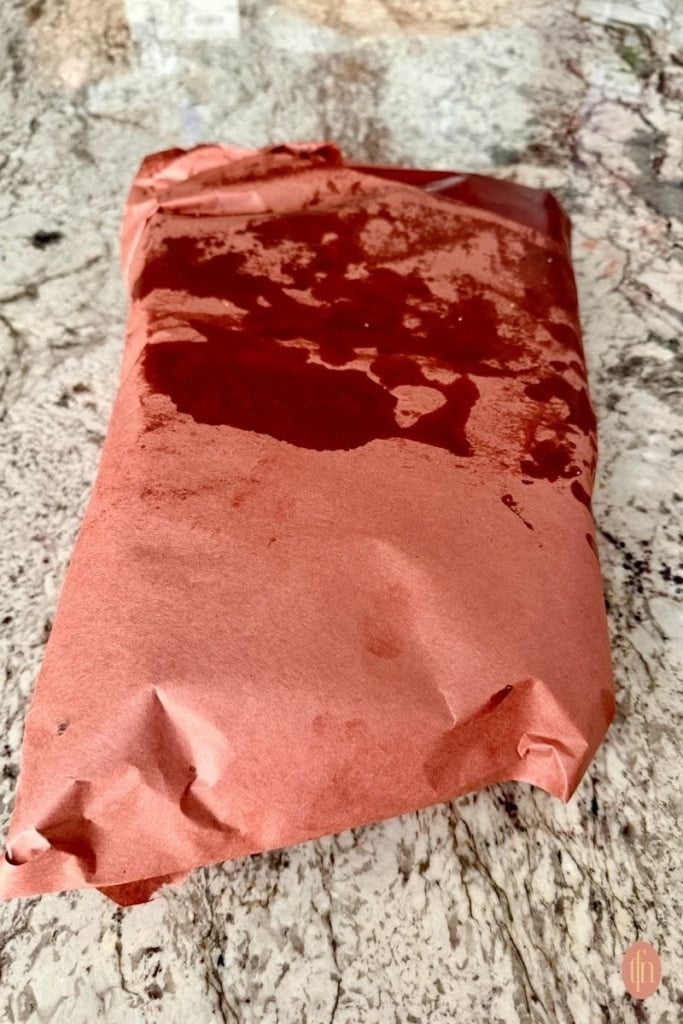
- Cook the brisket until it reaches an internal temperature of 198 to 203°F. Use a probe or fork to check for tenderness. When it slides in with little to no resistance, your brisket is ready. Pull brisket out of the smoker and let it sit wrapped on the counter until you notice a decrease in the internal temperature. This will tell you that your brisket has stopped cooking.
- If you intend on serving smoked beef brisket within the next hour, leave the brisket on the counter and slice after one hour. Leave the thermometer probe in place during the rest period to monitor the internal temperature. This rest period is essential to a good tasting brisket. If you intend on serving 2 or more hours away, put the wrapped brisket in the oven at 170 degrees until ready to serve. I’ve let briskets sit in a 170 degree oven for ten hours. They come out amazing.
🎯 TFN Pro Tip
Keep in mind that a half brisket generally takes 8 to 12 hours, while a full brisket can take 16 to 18 hours. A good rule of thumb is to plan for about 1 and 1/2 hours per pound, but every piece of meat is different
Brisket Done Temp
Your smoked beef brisket is done when the internal temperature reaches 198 to 203°F, however we go by feel. For example, if the brisket is 200°F, but not fork/probe tender we leave it on longer. Probe tender means when you place the meat thermometer in the meat there should be no resistance, it should slide in easily and feel tender.
Serving Suggestions
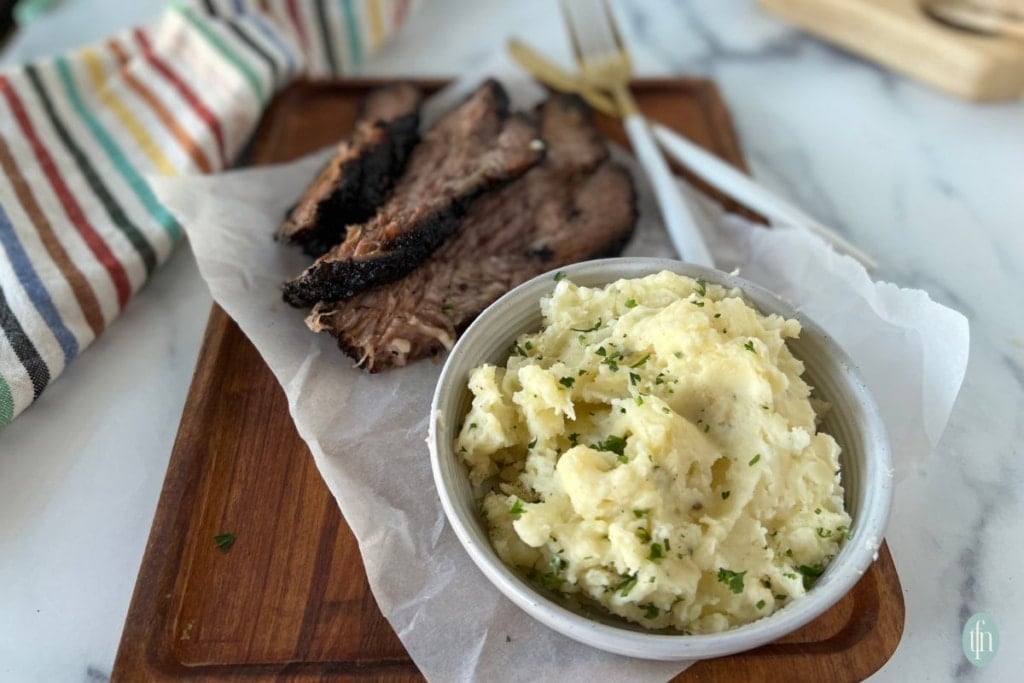
This large cut of beef is served best sliced with sides such as mashed potatoes, mac and cheese, or rice pilaf. You know we are going to recommend a fantastic bread recipe too! Our favorite is dutch oven sourdough but you can also pair with jalapeño cheddar biscuits. This smoked brisket is rounded off nicely with a side salad or broccoli raisin salad.
End the night with our cherished family recipe: lemon poke cake.
Recipe FAQs
Yes! It’s best to let it cool to room temperature, cut into dinner portions, vacuum seal and then freeze. This is a great idea if you have a large cut of brisket but aren’t feeding a lot of people. Thaw overnight in the refrigerator before reheating.
The best way to reheat is similar to how you cooked the brisket, low and slow. Using a microwave will toughen and dry out the meat so we don’t recommend that. We recommend putting the chunk of brisket (or individual slices) into a baking dish, adding a splash of beef broth on the bottom then wrapping in foil. Place it in the oven at 300°F for 20-30 minutes until heated through.
This happens when a brisket has reached a temperature where the fat begins rendering, which creates a natural cooling effect on the surface of the meat. It can last for hours depending on the fat content of your brisket. You don’t need to turn up the temperature unless you are on deadline, then increase the heat by 25°F.
Other Popular Recipes to Consider
- Ruth Chris Stuffed Chicken (Copycat Recipe)
- Sourdough Sandwich Bread
- Loaded Tater Tot Cups
- Oven Baked Chicken Tenders
If you tried this smoked brisket recipe or any other recipe on my website, please leave a 🌟 star rating and let me know how it went in the 📝 comments below. Thanks for visiting!
Smoked Brisket
Equipment
- smoker - or grill with smoker box or tube
- pink butcher paper - or foil
- Meat thermometer - with probe
- basting brush - or gloves for spreading seasoning and mustard
Ingredients
- 1 Full Brisket point and flat, approximately 16 pounds
- ¼ cup Prepared mustard (yellow mustard out of the bottle)
- ½ cup All-purpose seasonings
- ¼ cup Montreal steak seasoning optional
Instructions
- Using your hands, coat every surface of the brisket with a thin, even layer of yellow mustard. The mustard acts as a binder that holds your seasoning in place throughout the entire cook. You won't taste the mustard at the end of the cook.
- Generously season all sides of the brisket with your seasoning, pressing it firmly into the mustard layer so it grips the meat. Do not hold back here. A great brisket needs a bold, generous coat of seasoning to develop that beautiful bark.
- Allow the seasoned brisket to rest at room temperature for 30 to 45 minutes before it goes on the smoker. This rest period gives the rub time to penetrate the surface and begin bonding with the meat. While the brisket rests, go ahead and preheat your smoker to 225°F. Keep in mind this recipe generally takes 12-16 hours, but can take longer.
- Place the brisket fat side down directly on the smoker grate and close the lid.
- Around the 8 hour mark your meat will typically be around 165°F, you may notice the temperature stops climbing even though your smoker is holding steady. Do not panic. This is completely normal and is known as "the stall." It happens when the fat begins rendering and creates a natural cooling effect on the surface of the meat. It can last for several hours, so be patient and resist the urge to turn up the heat.
- When the brisket is 165°F, check the surface of your brisket. If the outside has developed your preferred level of bark (meaning a firm, dark mahogany-colored crust that feels set to the touch) it is time to wrap. Do not wrap before your brisket hits 165°F, and do not wrap until you are happy with the bark. Both conditions need to be met. Carefully remove the brisket from the smoker, lay on to a sheet of pink butcher paper on a large work surface, place the brisket in the center, and wrap it snugly by folding edge over edge to create a tight, leak-proof seal. Return it to the smoker seam side down.
- Continue smoking until the brisket reaches an internal temperature between 198°F and 203°F. Use a probe or fork to test for tenderness by inserting it into the thickest part of the flat. When it glides in with little to no resistance, your brisket is ready.
- Once the brisket comes off the smoker, leave it wrapped and let it rest on the counter, with your thermometer probe still in place. Watch for the internal temperature to begin dropping. That drop tells you the brisket has finished cooking and is now resting. This rest period is not optional. It is one of the most important steps in the whole process and makes a real big difference in the final flavor and texture.
- If you plan to serve within the next hour, keep the wrapped brisket on the counter and slice after a full hour has passed. If dinner is still two or more hours away, place the wrapped brisket in your oven set to 170°F and leave it there until you are ready to serve. A brisket can hold in a 170°F oven for up to ten hours and come out absolutely fantastic.
Notes
Nutrition

Tammy says
This was a total hit and the recipe instructions were very helpful!